Who Can Define Love?
A Bio-Relational Framework for Differentiating Familial, Platonic, and Romantic Attachment
Estimated reading time: 20 minutes | May 13, 2026
Evidence Note: This article integrates peer reviewed findings from developmental neuroscience, neuroendocrinology, reproductive immunology, virology, stress physiology, and public health. Every claim is tied to a cited primary source, and every source is listed in full with its digital object identifier at the end of the article. The Bio-Relational Science framework presented here is an original educational synthesis that translates this body of research into language the general reader can act on.
Abstract
The question of who can define love is deceptively simple, because love is not a singular phenomenon but a family of related attachment experiences produced by partially separable biological systems. This article argues that love can be defined through a bio-relational framework distinguishing familial, platonic, universal, and romantic forms of attachment. Romantic love is characterized by the interaction of three systems, lust, attraction, and attachment, each with distinct neural and endocrine signatures (Fisher et al., 2002; Bode & Kushnick, 2021; Seshadri, 2016). Functional imaging shows that early-stage romantic love activates dopamine-rich reward and motivation regions including the ventral tegmental area and caudate nucleus (Aron et al., 2005; Bartels & Zeki, 2000; Fisher et al., 2005). Oxytocin and vasopressin support selective attachment, trust, and relationship maintenance, and oxytocin tracks interactive reciprocity during the first months of a romantic bond (Carter, 2017; Young & Wang, 2004; Schneiderman et al., 2012; Walum et al., 2008; Walum et al., 2012). Familial love engages an overlapping but distinguishable parental care circuit, documented in comparative work and in human maternal brain imaging (Bartels & Zeki, 2004; Rilling & Young, 2014; Kim et al., 2016; Feldman, 2017). Platonic love has its own biology, with the brain opioid system and the structural constraints on friendship networks now well described (Machin & Dunbar, 2011; Dunbar, 2018; Curry et al., 2012). Universal love, expressed as compassion, is trainable and produces measurable changes in neural response and affect (Klimecki et al., 2013; Hofmann et al., 2011). Romantic love plausibly evolved by co-opting the mother-infant bonding system, which explains both the overlap and the specialization (Bode, 2023). The article argues that love is not merely a feeling but an organizing force visible in patterns of care, reciprocity, loyalty, and attachment regulation, and that a woman who cannot tell which system is operating cannot accurately read what is being offered to her (Turner, 2026).
Keywords: love, romantic attachment, familial love, platonic love, universal love, oxytocin, vasopressin, dopamine, pair bonding, women’s wellness, bio-relational science
Introduction
“Who can define love?”
The question is treated as unanswerable, and that treatment is itself a problem. Love is one of the most frequently used words in the language and one of the least consistently specified. People use the same word for a mother, a friend, a stranger in need, and a partner, and then act surprised when the word fails to predict behavior.
It fails because it is not one thing. From a bio-relational perspective, love is a broad organizing force that takes different forms depending on the bond involved, and those forms run on partially different biological machinery. Familial love supports kinship, protection, and instinctive care. Platonic love supports friendship, cooperation, and shared values. Universal love involves empathy and compassion extended across humanity. Romantic love engages attraction, desire, bonding, and attachment systems that are biologically specialized (Fisher et al., 2002; Bode & Kushnick, 2021; Feldman, 2017).
This is not a philosophical distinction. It is a measurable one. Different forms of love recruit different neural systems, involve different hormones, follow different time courses, and produce different obligations. Treating them as interchangeable produces predictable errors, and the errors are not evenly distributed. A woman who has been taught that love is love is not equipped to notice that what she is receiving is affection without attachment, or attraction without bonding, or loyalty without desire.
So the answer to the question is this. Love can be defined, and it has been, repeatedly, by people who studied its forms rather than its feelings. The real question is whether we are defining the right kind of love for the context in which it is being used (Turner, 2026).
Conceptual Framework
Four constructs organize the analysis.
Lust, attraction, and attachment are the three partially independent systems that jointly constitute romantic love. Fisher et al. (2002) defined them as separate brain systems with distinct evolutionary functions, distinct neurochemistry, and distinct behavioral outputs, capable of operating independently of one another. Bode and Kushnick (2021) reviewed the proximate and ultimate evidence and confirmed the multi-system account.
The reward and motivation circuit is what makes early romantic love feel compulsive rather than merely pleasant. Imaging locates it in dopamine-rich regions including the ventral tegmental area and caudate nucleus (Aron et al., 2005; Bartels & Zeki, 2000; Fisher et al., 2005).
The pair-bonding system is the oxytocin and vasopressin machinery that converts attraction into selective, durable attachment, established in comparative neuroscience and confirmed in human genetics (Young & Wang, 2004; Insel & Young, 2001; Carter, 2017; Walum et al., 2008; Walum et al., 2012).
Co-option is the evolutionary mechanism that explains why these categories overlap without collapsing. Bode (2023) argues that romantic love evolved by co-opting the mother-infant bonding system, which accounts for the shared oxytocin and reward substrates alongside the genuinely specialized features of adult pair bonding.
The argument is that these four constructs let a person distinguish forms of love by what they do rather than by what they are called, and that this distinction is the practical skill most relationship education omits.
Discussion
Love is a category label, not a single state
The strongest evidence that love is plural comes from the fact that its components can be separated experimentally and observationally.
Fisher et al. (2002) made the case directly. Lust, romantic attraction, and attachment are distinct brain systems that evolved to solve different reproductive problems. Lust motivates mating opportunity in general. Attraction focuses mating energy on a specific individual. Attachment sustains a connection long enough to raise young. Because they are separate systems, they can run out of alignment. A person can feel lust without attraction, attraction without attachment, and attachment without either.
Diamond (2003) tested this separation formally in Psychological Review, proposing a biobehavioral model in which romantic love and sexual desire are functionally independent, and showing that the pattern holds across sexual orientations. Diamond (2004) summarized the evidence that the two can operate on different objects in the same person at the same time.
Sternberg (1986) reached a compatible conclusion from a different direction, proposing that love varies along intimacy, passion, and commitment, with different combinations producing recognizably different relationship types. Hatfield and Sprecher (1986) developed a validated measure of passionate love specifically because passionate love behaves differently from companionate attachment and needed separate measurement.
The convergence matters. Evolutionary theory, neuroscience, and psychometrics all arrive at the same structure. Love is a category containing distinct states, not a single state with varying intensity.
Familial love and the first template
Familial love is usually the earliest form a person experiences, and it is the one that calibrates everything after it.
Rilling and Young (2014) reviewed the biology of mammalian parenting in Science and documented how parental care shapes offspring social development through oxytocin, vasopressin, and dopamine systems. Kim et al. (2016) documented plasticity in the human maternal brain, with structural and functional changes across the transition to parenthood. Feldman (2012) established oxytocin as a central mechanism of human social affiliation, and Weisman et al. (2012) showed experimentally that administering oxytocin to a parent enhanced the infant’s physiological and behavioral readiness for social engagement, meaning the bonding system operates dyadically rather than in one person at a time.
Hazan and Shaver (1987) then made the connection that organizes the modern field, conceptualizing romantic love as an attachment process built on the same system described in infancy. Feldman (2017) reviewed the neurobiology of human attachments and traced the continuity from parental to romantic bonds while identifying what changes between them.
The practical point is the one her original article made. Familial love teaches the nervous system whether connection is safe. At its best it creates a baseline of security from which later relationships develop. At its worst it transmits conditionality, secrecy, or relational injury, and the template is carried forward into adult romantic life (Mikulincer & Shaver, 2019; Fraley & Roisman, 2019).
Familial love is also distinctive in not requiring mutual selection. It is assigned rather than chosen, and Curry et al. (2012) documented the behavioral consequence: altruism in social networks shows a kinship premium, with people giving more to relatives than to non-relatives of equivalent emotional closeness. Kinship changes the accounting.
Platonic love has its own biology
Friendship is routinely treated as a lesser form of love, as though it were romance with something missing. The research does not describe it that way.
Machin and Dunbar (2011) reviewed the brain opioid theory of social attachment and assembled the evidence that the endogenous opioid system mediates the warmth and contentment of close non-reproductive bonds. Friendship is not running on borrowed romantic machinery. It has a substrate of its own.
Dunbar (2018) described the anatomy of friendship in Trends in Cognitive Sciences, documenting that social networks are layered, that the innermost layer of close friends is small and structurally constrained, and that friendships require continuous behavioral investment to persist. Friendship is costly, maintained, and limited in capacity, which is a reasonable working definition of something valuable.
This supports the claim in her original article that platonic love deserves its own definition rather than a comparative one. Platonic bonds are often among the most reliable relationships people have, precisely because they are not organized around sexual urgency or romantic idealization. They are cooperative rather than possessive and enduring rather than acute.
The distinction has a practical edge. Because friendship and romance both produce warmth, closeness, and preferential treatment, they are easy to confuse from the inside, particularly when one party is experiencing one and the other party is experiencing the other. The difference is not how much someone cares. It is which system is running.
Universal love and the compassion system
Universal love, meaning compassion and goodwill extended toward humanity broadly, is the form most often dismissed as abstract. It turns out to be the most clearly trainable.
Klimecki et al. (2013) compared compassion training with empathy training and found differential patterns of functional brain plasticity, with compassion training increasing activity in reward-related regions and associated positive affect, while empathy training increased activity in networks associated with shared negative affect. The two are distinguishable at the neural level and produce different emotional consequences for the person doing them.
Hofmann et al. (2011) reviewed loving-kindness and compassion meditation in Clinical Psychology Review and found evidence for their use as psychological interventions, with effects on positive affect and on interpersonal attitudes.
Two implications follow. First, universal love is not merely a sentiment. It is a practiced capacity with measurable neural correlates. Second, it is not a substitute for personal attachment, because it is not directed at a specific person and carries none of the selectivity that pair bonding requires. Someone can be genuinely compassionate toward the world and unavailable for a bond. Those facts are compatible, and confusing them is a common error.
Romantic love: three systems, not one
Romantic love is the most biologically complex of the forms discussed here, and the complexity is the reason it is so frequently misread.
Seshadri (2016) reviewed the neuroendocrinology of love and described the hormonal architecture across lust, attraction, and attachment phases, including the roles of testosterone and estrogen in desire, dopamine and norepinephrine in attraction, and oxytocin and vasopressin in attachment. Bode and Kushnick (2021) provided the most comprehensive recent synthesis, integrating proximate mechanisms with ultimate evolutionary function.
Fisher et al. (2006) described romantic love as a mammalian brain system for mate choice, rather than an emotion in the ordinary sense. This is a meaningful reclassification. Emotions are states. Motivation systems are drives that organize behavior toward a goal, and they do not switch off because the person holding them decides they should.
Bode and Kavanagh (2023) added a finding that fits ordinary experience precisely. People in romantic love showed heightened behavioral activation system sensitivity specifically toward the loved one, meaning the reward system becomes selectively tuned to one person rather than globally more sensitive.
That selectivity is the signature. Romantic love is not general intensity. It is a patterned state in which desire and attachment begin to organize around a particular person, and the organization is visible in behavior long before it is admitted in words.
What the brain imaging actually shows
The imaging literature is unusually consistent for a field this young, and it is worth stating what it found rather than gesturing at it.
Bartels and Zeki (2000) scanned people viewing photographs of their romantic partners and found activation in reward-related regions including the medial insula, anterior cingulate, caudate nucleus, and putamen, with deactivation in regions associated with negative emotion and social judgment. Aron et al. (2005) found that early-stage intense romantic love activated the right ventral tegmental area and dorsal caudate body, regions central to reward, motivation, and goal-directed behavior rather than to emotion generally. Fisher et al. (2005) replicated and interpreted this as a neural mechanism for mate choice.
Fisher et al. (2010) examined the other end and found that romantic rejection activated regions associated with reward, addiction, and emotion regulation, including areas implicated in craving. Xu et al. (2012) found that regional brain activity during early-stage intense romantic love predicted relationship outcome at forty months.
Two conclusions follow. Romantic love runs primarily on motivation and reward circuitry rather than on emotion circuitry, which is why it produces focused pursuit, intrusive thinking, and difficulty stopping. And its early neural signature carries predictive information about where the relationship goes, which means the state is not arbitrary.
Romantic love and maternal love overlap, and that is the point
The most useful recent finding for distinguishing forms of love is the one that explains why they are hard to distinguish.
Bartels and Zeki (2004) scanned maternal and romantic love in the same study and found both overlapping and distinct activation. Both recruited regions rich in oxytocin and vasopressin receptors and both suppressed activity in networks associated with negative emotion and social judgment. But each also activated regions specific to itself.
Bode (2023) proposed the evolutionary account that makes sense of this pattern, arguing that romantic love evolved by co-opting the mother-infant bonding mechanism. Shared substrate, repurposed function.
This resolves a confusion that appears constantly in ordinary life. The overlap is real, which is why romantic attachment can feel like the safety of being cared for as a child, and why the loss of a partner can feel like the loss of a parent. The specialization is also real, which is why a partner who provides comfort but not desire, or desire but not bonding, is not delivering the same thing.
The Bio-Relational reading is that the overlap is what makes misidentification easy and the specialization is what makes misidentification costly.
Attachment is what makes romantic love persist
Attraction is not the hard part. Attraction is common, quick, and unreliable. The part that determines outcomes is whether attachment follows.
Young and Wang (2004) established the neurobiology of pair bonding in monogamous voles, identifying oxytocin, vasopressin, and dopamine as the core mechanism and demonstrating that manipulating these systems manipulates partner preference formation directly. Insel and Young (2001) situated this within the broader neurobiology of attachment.
This is not confined to rodents. Walum et al. (2008) found in a study of more than five hundred human twin pairs that variation in the vasopressin receptor 1a gene was associated with pair bonding behavior, partner bonding scores, and marital status in men. Walum et al. (2012) found that variation in the oxytocin receptor gene was associated with pair bonding and social behavior in women. The same system that produces partner preference in voles has measurable associations with bonding behavior in humans.
Schneiderman et al. (2012) then tracked oxytocin during the first months of romantic attachment and found that levels were higher in new couples than in singles, and that oxytocin corresponded to interactive reciprocity, meaning synchronized, mutually responsive behavior. Oxytocin tracked what the couple was doing together, not what either felt alone.
Zeifman (2019) reviewed the developmental approach to pair bonds and confirmed that adult romantic attachments follow a recognizable formation sequence rather than appearing whole.
So attachment is a process with observable markers and a timeline. It is not a mood, and it is not produced by declaration.
Long-term romantic love is real and measurable
A common claim is that romantic love necessarily fades into companionship, and that anyone expecting otherwise is naive. The data do not support the strong version of that claim.
Acevedo and Aron (2009) reviewed the evidence and distinguished romantic love, meaning intensity, engagement, and sexual interest, from obsessive love, meaning anxiety and uncertainty. Romantic love without the obsessive component was associated with high relationship satisfaction in both short-term and long-term relationships. What declines reliably is obsession, not romantic love.
Acevedo et al. (2012) then scanned people married an average of twenty-one years who reported still being intensely in love with their spouse. Viewing the partner’s face activated the same dopamine-rich reward regions found in early-stage romantic love, including the ventral tegmental area. Long-term intense romantic love was accompanied by activation in regions associated with attachment and calm as well.
This supports the framework’s core position rather than undercutting it. Romantic love is a durable state when the bond it depends on is real. The fading that people describe is often the fading of uncertainty-driven obsession, or the failure of a bond that never fully formed, and those two possibilities look similar from inside and have very different implications.
Why the definition matters
Love is discussed as though it were self-evident, but poor definitions produce poor decisions, and the decisions are consequential.
If people assume that all love is the same, they bring the wrong expectations into the wrong relationship. A woman may read a man’s charm as romantic attachment. A man may read family loyalty as romantic readiness. Someone may read reliable friendship as the beginning of a pair bond. In each case the error is not emotional. It is categorical.
The systems literature explains why this is so easy. Because lust, attraction, and attachment are separable, a person can deliver one convincingly while lacking the others, without necessarily intending deception (Fisher et al., 2002; Diamond, 2003). Because familial, platonic, and romantic bonds share substrate, the felt warmth is genuinely similar across them (Bartels & Zeki, 2004; Bode, 2023).
What distinguishes the categories is behavior over time, not intensity in the moment. Attachment produces selectivity, proximity seeking, distress at separation, and reorganization of priorities around one person (Hazan & Shaver, 1987; Zeifman, 2019). Attraction without attachment produces pursuit that does not consolidate. Friendship produces steady regard without the selective reward tuning that Bode and Kavanagh (2023) documented.
How to tell which love is on offer
This is the practical translation, and it is the part her original article pointed toward.
Look for selectivity rather than warmth. Warmth is present in every form of love. Selectivity, meaning that one person’s presence specifically organizes attention, reward, and priority, is the signature of romantic attachment (Bode & Kavanagh, 2023; Acevedo et al., 2012).
Look for reciprocity rather than declaration. Oxytocin during early romantic attachment tracked interactive reciprocity, meaning the mutual, synchronized behavior of the pair, not stated feelings (Schneiderman et al., 2012).
Look for consolidation over time. Attachment forms in a sequence, and a connection that has not consolidated after an extended period is supplying information (Zeifman, 2019; Hazan & Shaver, 1987).
Look for the components separately. Ask whether desire is present, whether focused attraction is present, and whether attachment is present, rather than asking whether love is present. The composite question cannot be answered. The three component questions can (Fisher et al., 2002).
And accept the answer when only some of the components are there. A man offering friendship is offering something real. A man offering attraction without attachment is also offering something real. Neither becomes a pair bond because it is named one.
Relation to Bio-Relational Science
Bio-Relational Science treats love as an organizing force that becomes visible through biology and behavior rather than through self-report. This question is the framework’s foundational case.
The framework holds that relational outcomes follow from biology, attachment history, and behavior acting together. Applied to love, this means the word names at least four different configurations of those three factors, and that each configuration produces different predictions. Familial love is built on the parental care system and calibrates the template (Rilling & Young, 2014; Feldman, 2017). Platonic love runs partly on the opioid system and on sustained behavioral investment (Machin & Dunbar, 2011; Dunbar, 2018). Universal love is a trainable compassion capacity (Klimecki et al., 2013). Romantic love is a three-system state built by co-opting the mother-infant bond and specialized for selective pair bonding (Fisher et al., 2002; Bode, 2023; Young & Wang, 2004).
The framework’s central claim is that these distinctions are observable, and that a woman is entitled to observe them rather than to wait for a man to clarify his intentions. Selectivity, reciprocity, and consolidation are behavioral facts. They can be watched.
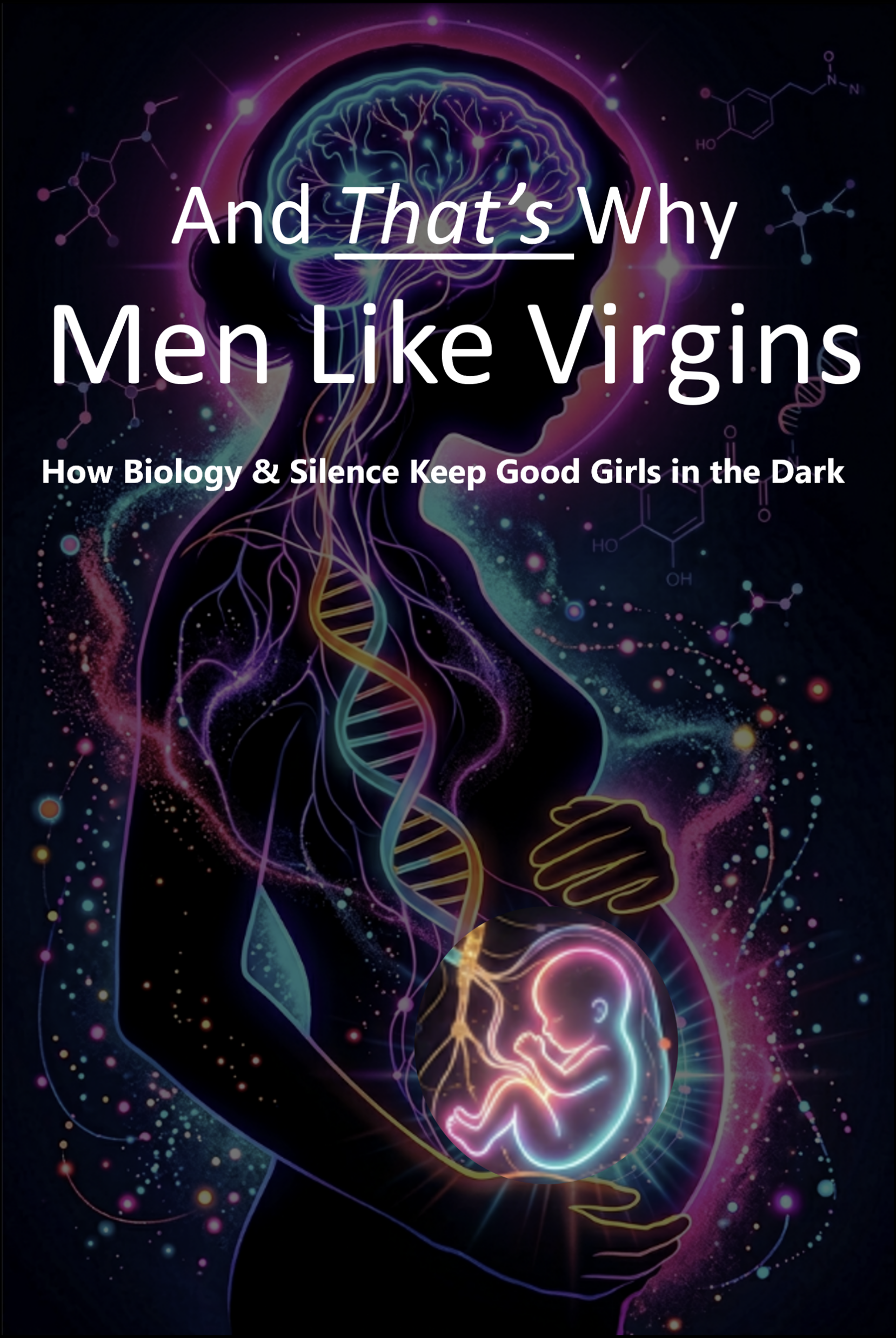
Turner (2026) develops this in And That’s Why Men Like Virgins, tracing how silence about the biology of bonding leaves women without vocabulary for distinctions their own experience keeps producing, and how the resulting confusion is frequently misread as their own emotional excess. The present analysis extends that argument with the comparative neuroscience, imaging, endocrine, and genetic literatures.
Implications for Women’s Wellness and Bio-Relational Education
Emotional confusion produces relational vulnerability, and vague language produces emotional confusion. Clear definitions are protective.
Five teaching priorities follow.
Teach the four forms as distinct categories with distinct markers. When women are taught to collapse all love into one vague category, they cannot distinguish safety from friendship, friendship from attraction, or attraction from pair bonding. A more accurate vocabulary supports better decisions about whom to trust and what kind of relationship is actually forming.
Teach the three-system model of romantic love explicitly. Lust, attraction, and attachment can occur independently, and knowing this converts a bewildering experience into a diagnostic one (Fisher et al., 2002; Diamond, 2003).
Teach selectivity and reciprocity as the observable markers of romantic attachment. Both are visible in behavior, both are supported by the endocrine and imaging evidence, and neither requires interpreting a partner’s inner life (Schneiderman et al., 2012; Bode & Kavanagh, 2023).
Teach that overlap between forms of love is expected and not evidence of equivalence. Because romantic love was built from the parental bonding system, romantic attachment genuinely feels like safety, and safety alone is genuinely not romantic attachment (Bartels & Zeki, 2004; Bode, 2023).
Teach that durable romantic love exists. The claim that passion must fade is partly a confusion between romantic love and obsessive uncertainty, and long-term intense romantic love has been documented in the brain (Acevedo & Aron, 2009; Acevedo et al., 2012). Women should not be told to lower expectations on the basis of a distinction the research already corrected.
For educators and clinicians, the implication is that love education belongs in emotional literacy curricula as taxonomy, not as sentiment. For women, the implication is that defining love correctly increases discernment, because a bond that is named accurately can be evaluated.
Conclusion
Who can define love?
Anyone can attempt a definition. Love is better defined by those who examine its forms, patterns, and biological underpinnings carefully, and that work has been done. Familial, platonic, universal, and romantic love are related and not interchangeable, and the distinctions among them are visible in neural activation, hormone profiles, genetic associations, behavior, and time course.
Romantic love in particular is a distinct neurobiological and relational state built from three separable systems, likely assembled evolutionarily by co-opting the mother-infant bond, and characterized by selective reward tuning toward one person (Fisher et al., 2002; Bode, 2023; Bode & Kavanagh, 2023). It is not simply a feeling, and it is not friendship or kinship with more intensity added.
For women’s wellness and relational education, that clarity is the point. The question in real life is rarely whether love exists. It is which love is present, whether it is mutual, and whether it has consolidated. Those questions have answers.
When love is defined well, it can be recognized more accurately, trusted more wisely, and lived more intentionally.
References
Acevedo, B. P., & Aron, A. (2009). Does a long-term relationship kill romantic love? Review of General Psychology, 13(1), 59-65. https://doi.org/10.1037/a0014226
Acevedo, B. P., Aron, A., Fisher, H. E., & Brown, L. L. (2012). Neural correlates of long-term intense romantic love. Social Cognitive and Affective Neuroscience, 7(2), 145-159. https://doi.org/10.1093/scan/nsq092
Aron, A., Fisher, H., Mashek, D. J., Strong, G., Li, H., & Brown, L. L. (2005). Reward, motivation, and emotion systems associated with early-stage intense romantic love. Journal of Neurophysiology, 94(1), 327-337. https://doi.org/10.1152/jn.00838.2004
Bartels, A., & Zeki, S. (2000). The neural basis of romantic love. NeuroReport, 11(17), 3829-3834. https://doi.org/10.1097/00001756-200011270-00046
Bartels, A., & Zeki, S. (2004). The neural correlates of maternal and romantic love. NeuroImage, 21(3), 1155-1166. https://doi.org/10.1016/j.neuroimage.2003.11.003
Bode, A. (2023). Romantic love evolved by co-opting mother-infant bonding. Frontiers in Psychology, 14, 1176067. https://doi.org/10.3389/fpsyg.2023.1176067
Bode, A., & Kavanagh, P. S. (2023). Romantic love and behavioral activation system sensitivity to a loved one. Behavioral Sciences, 13(11), 921. https://doi.org/10.3390/bs13110921
Bode, A., & Kushnick, G. (2021). Proximate and ultimate perspectives on romantic love. Frontiers in Psychology, 12, 573123. https://doi.org/10.3389/fpsyg.2021.573123
Carter, C. S. (2017). The oxytocin-vasopressin pathway in the context of love and fear. Frontiers in Endocrinology, 8, 356. https://doi.org/10.3389/fendo.2017.00356
Curry, O., Roberts, S. G. B., & Dunbar, R. I. M. (2012). Altruism in social networks: Evidence for a kinship premium. British Journal of Psychology, 104(2), 283-295. https://doi.org/10.1111/j.2044-8295.2012.02119.x
Diamond, L. M. (2003). What does sexual orientation orient? A biobehavioral model distinguishing romantic love and sexual desire. Psychological Review, 110(1), 173-192. https://doi.org/10.1037/0033-295X.110.1.173
Diamond, L. M. (2004). Emerging perspectives on distinctions between romantic love and sexual desire. Current Directions in Psychological Science, 13(3), 116-119. https://doi.org/10.1111/j.0963-7214.2004.00287.x
Dunbar, R. I. M. (2018). The anatomy of friendship. Trends in Cognitive Sciences, 22(1), 32-51. https://doi.org/10.1016/j.tics.2017.10.004
Feldman, R. (2012). Oxytocin and social affiliation in humans. Hormones and Behavior, 61(3), 380-391. https://doi.org/10.1016/j.yhbeh.2012.01.008
Feldman, R. (2017). The neurobiology of human attachments. Trends in Cognitive Sciences, 21(2), 80-99. https://doi.org/10.1016/j.tics.2016.11.007
Fisher, H. E., Aron, A., & Brown, L. L. (2005). Romantic love: An fMRI study of a neural mechanism for mate choice. The Journal of Comparative Neurology, 493(1), 58-62. https://doi.org/10.1002/cne.20772
Fisher, H. E., Aron, A., & Brown, L. L. (2006). Romantic love: A mammalian brain system for mate choice. Philosophical Transactions of the Royal Society B: Biological Sciences, 361(1476), 2173-2186. https://doi.org/10.1098/rstb.2006.1938
Fisher, H. E., Aron, A., Mashek, D., Li, H., & Brown, L. L. (2002). Defining the brain systems of lust, romantic attraction, and attachment. Archives of Sexual Behavior, 31(5), 413-419. https://doi.org/10.1023/A:1019888024255
Fisher, H. E., Brown, L. L., Aron, A., Strong, G., & Mashek, D. (2010). Reward, addiction, and emotion regulation systems associated with rejection in love. Journal of Neurophysiology, 104(1), 51-60. https://doi.org/10.1152/jn.00784.2009
Fraley, R. C., & Roisman, G. I. (2019). The development of adult attachment styles: Four lessons. Current Opinion in Psychology, 25, 26-30. https://doi.org/10.1016/j.copsyc.2018.02.008
Hatfield, E., & Sprecher, S. (1986). Measuring passionate love in intimate relationships. Journal of Adolescence, 9(4), 383-410. https://doi.org/10.1016/S0140-1971(86)80043-4
Hazan, C., & Shaver, P. (1987). Romantic love conceptualized as an attachment process. Journal of Personality and Social Psychology, 52(3), 511-524. https://doi.org/10.1037/0022-3514.52.3.511
Hofmann, S. G., Grossman, P., & Hinton, D. E. (2011). Loving-kindness and compassion meditation: Potential for psychological interventions. Clinical Psychology Review, 31(7), 1126-1132. https://doi.org/10.1016/j.cpr.2011.07.003
Insel, T. R., & Young, L. J. (2001). The neurobiology of attachment. Nature Reviews Neuroscience, 2(2), 129-136. https://doi.org/10.1038/35053579
Kim, P., Strathearn, L., & Swain, J. E. (2016). The maternal brain and its plasticity in humans. Hormones and Behavior, 77, 113-123. https://doi.org/10.1016/j.yhbeh.2015.08.001
Klimecki, O. M., Leiberg, S., Ricard, M., & Singer, T. (2013). Differential pattern of functional brain plasticity after compassion and empathy training. Social Cognitive and Affective Neuroscience, 9(6), 873-879. https://doi.org/10.1093/scan/nst060
Machin, A. J., & Dunbar, R. I. M. (2011). The brain opioid theory of social attachment: A review of the evidence. Behaviour, 148(9-10), 985-1025. https://doi.org/10.1163/000579511X596624
Mikulincer, M., & Shaver, P. R. (2019). Attachment orientations and emotion regulation. Current Opinion in Psychology, 25, 6-10. https://doi.org/10.1016/j.copsyc.2018.02.006
Rilling, J. K., & Young, L. J. (2014). The biology of mammalian parenting and its effect on offspring social development. Science, 345(6198), 771-776. https://doi.org/10.1126/science.1252723
Schneiderman, I., Zagoory-Sharon, O., Leckman, J. F., & Feldman, R. (2012). Oxytocin during the initial stages of romantic attachment: Relations to couples’ interactive reciprocity. Psychoneuroendocrinology, 37(8), 1277-1285. https://doi.org/10.1016/j.psyneuen.2011.12.021
Seshadri, K. G. (2016). The neuroendocrinology of love. Indian Journal of Endocrinology and Metabolism, 20(4), 558-563. https://doi.org/10.4103/2230-8210.183479
Sternberg, R. J. (1986). A triangular theory of love. Psychological Review, 93(2), 119-135. https://doi.org/10.1037/0033-295X.93.2.119
Turner, D. R. (2026). And that’s why men like virgins: How biology and silence keep good girls in the dark. VirtualVillageMom Publishing.
Walum, H., Lichtenstein, P., Neiderhiser, J. M., Reiss, D., Ganiban, J. M., Spotts, E. L., Pedersen, N. L., Anckarsater, H., Larsson, H., & Westberg, L. (2012). Variation in the oxytocin receptor gene is associated with pair-bonding and social behavior. Biological Psychiatry, 71(5), 419-426. https://doi.org/10.1016/j.biopsych.2011.09.002
Walum, H., Westberg, L., Henningsson, S., Neiderhiser, J. M., Reiss, D., Igl, W., Ganiban, J. M., Spotts, E. L., Pedersen, N. L., Eriksson, E., & Lichtenstein, P. (2008). Genetic variation in the vasopressin receptor 1a gene (AVPR1A) associates with pair-bonding behavior in humans. Proceedings of the National Academy of Sciences, 105(37), 14153-14156. https://doi.org/10.1073/pnas.0803081105
Weisman, O., Zagoory-Sharon, O., & Feldman, R. (2012). Oxytocin administration to parent enhances infant physiological and behavioral readiness for social engagement. Biological Psychiatry, 72(12), 982-989. https://doi.org/10.1016/j.biopsych.2012.06.011
Xu, X., Brown, L., Aron, A., Cao, G., Feng, T., Acevedo, B., & Weng, X. (2012). Regional brain activity during early-stage intense romantic love predicted relationship outcomes after 40 months: An fMRI assessment. Neuroscience Letters, 526(1), 33-38. https://doi.org/10.1016/j.neulet.2012.08.004
Young, L. J., & Wang, Z. (2004). The neurobiology of pair bonding. Nature Neuroscience, 7(10), 1048-1054. https://doi.org/10.1038/nn1327
Zeifman, D. M. (2019). Attachment theory grows up: A developmental approach to pair bonds. Current Opinion in Psychology, 25, 139-143. https://doi.org/10.1016/j.copsyc.2018.06.001
About the Author
Donna R. Turner, Ed.S., MPH, CHES, HSMI, CDVA is the founder of the Center for Bio-Relational Health (CBRH) and the developer of the Bio-Relational Science educational framework. Her work integrates educational psychology, public health, neuroscience, reproductive biology, and relationship science to improve health literacy and relationship decision-making.
A Certified Health Education Specialist (CHES), Turner has spent more than two decades developing educational programs that translate complex scientific research into practical knowledge for the public. Her research interests include pair bonding, neuroendocrinology, reproductive health, human papillomavirus (HPV), stress physiology, and evidence-based relationship education.
She is the author of And That’s Why Men Like Virgins: How Biology & Silence Keep Good Girls in the Dark, the inventor of a patent-pending over-the-counter HPV sperm testing technology, and the creator of the Truth Talk relationship education series.
Learn more about the Center for Bio-Relational Health, explore additional Featured Articles, browse the Relationship Question Library for practical, evidence-informed answers grounded in Bio-Relational Science, or explore the app for free relationship lessons and unlock Ask Donna René for personalize guidance to your relationship questions.
Continue Exploring Bio-Relational Science
Want the broader relationship framework?
Explore attraction, attachment, intimacy, heartbreak, male romantic behavior, stress, trauma, and relationship decision-making in one practical book written for adult women.
Explore the Book