Dating Without Exclusivity:
A Bio-Relational Analysis
Asymmetrical Investment, Relational Uncertainty, and the Biology of Bonding Without Commitment
Estimated reading time: 26 minutes | May 31, 2026
Evidence Note: This article integrates peer reviewed findings from developmental neuroscience, neuroendocrinology, reproductive immunology, virology, stress physiology, and public health. Every claim is tied to a cited primary source, and every source is listed in full with its digital object identifier at the end of the article. The Bio-Relational Science framework presented here is an original educational synthesis that translates this body of research into language the general reader can act on.
Abstract
Dating was originally structured as a bounded evaluation period that ended in a decision. Modern dating frequently removes the decision while keeping the intimacy, producing arrangements in which one partner invests as though commitment were approaching and the other retains full optionality. This article examines the question, “What is the point of dating someone if they do not want to be in an exclusive relationship with you?” through the Bio-Relational Science framework. The analysis rests on four bodies of peer reviewed evidence. First, commitment is a measurable construct with identified determinants, and satisfaction, investment size, and quality of alternatives jointly predict it across a meta-analysis of the investment model (Rusbult, 1980; Le & Agnew, 2003). Second, relational uncertainty is not a neutral waiting state; it degrades information processing, raises jealousy, and predicts relational irritation (Knobloch & Solomon, 1999, 2005; Theiss & Solomon, 2006). Third, bonding machinery activates on intimacy rather than on status, and it is sex differentiated: vasopressin governs pair bonding in males while oxytocin governs partner preference formation in females, a split confirmed in human receptor gene variation (Winslow et al., 1993; Insel & Hulihan, 1995; Walum et al., 2008, 2012). Plasma oxytocin rises with sexual response, and oxytocin is released during affiliative contact regardless of whether a commitment exists (Carmichael et al., 1987; Feldman, 2012). Fourth, the casual sex literature shows that emotional outcomes depend on motivation and sociosexual orientation rather than on the behavior itself, which means the same arrangement produces distress in one person and none in another (Vrangalova, 2015; Vrangalova & Ong, 2014; Wesche et al., 2021; Sandberg-Thoma & Kamp Dush, 2014). Male commitment is itself visible in endocrine data, with partnered and married men showing lower testosterone than single men in cross-sectional, longitudinal, and meta-analytic work (Burnham et al., 2003; Gray et al., 2004; van Anders & Watson, 2006; Grebe et al., 2019). The article argues that non-exclusivity is usually a stated preference rather than an unresolved question, that the costs of ambiguity fall asymmetrically on the more invested partner, and that relationship privileges should match relationship status. A prevention oriented framework for discernment and exit is offered (Turner, 2026).
Keywords: dating, exclusivity, commitment, relational uncertainty, oxytocin, vasopressin, testosterone, sociosexuality, asymmetrical investment, women’s wellness, bio-relational science
Introduction
“What is the point of dating someone if they do not want to be in an exclusive relationship with you?”
The question is sharper than it looks, because it contains its own answer. If dating exists to determine whether a committed partnership is possible, then dating someone who has ruled out commitment has no point. The process has been separated from its purpose.
Historically that separation was harder to arrange. Dating was an observation period with a built in terminus. Two people watched each other, gathered evidence about character and reliability, and then either committed or parted. The arrangement was bounded, and the boundary was the whole mechanism.
What has changed is not human biology. It is the structure. A person can now receive sexual access, emotional labor, companionship, social presentation, and practical support without ever assuming the obligations that ordinarily accompany a bond. The privileges have been unbundled from the commitment, and the unbundling is usually deliberate.
This matters biologically, not only morally. Intimacy is not a neutral transaction that a person can enter and exit without cost. Emotional disclosure, physical touch, and sexual contact activate identifiable neuroendocrine systems that build attachment (Carmichael et al., 1987; Schneiderman et al., 2012; Feldman, 2012). Those systems do not consult the relationship label before acting. A woman can be told that nothing is official while her physiology proceeds as though something is.
The result is asymmetrical investment. One person is accumulating attachment, hope, and exit cost. The other is holding a position that carries no exit cost at all. Both people may be honest, and the arrangement can still be structurally unfair, because the two participants are not paying the same price to remain in it.
This article treats that asymmetry as the central issue. It sets out what the research says about commitment as a measurable variable, about the costs of sustained ambiguity, about how bonding works and why it does not distribute evenly between the sexes, and about what a woman can reasonably conclude when exclusivity is declined (Turner, 2026).
Conceptual Framework
Four constructs organize the analysis.
Commitment is the psychological state of intent to persist in a relationship, and it is measurable rather than atmospheric. Rusbult (1980) established that commitment is predicted by satisfaction, investment size, and quality of alternatives, and Le and Agnew (2003) confirmed all three determinants across a meta-analysis of the investment model. Commitment also functions to secure attachment, which is why its absence is felt in the body and not only in the plans (Stanley et al., 2010).
Relational uncertainty is doubt about one’s own involvement, the partner’s involvement, or the status of the relationship itself. It is an established construct with validated measurement, and it predicts biased information processing, jealousy, and irritation rather than patient neutrality (Knobloch & Solomon, 1999, 2005; Theiss & Solomon, 2006).
Pair-bonding neuroendocrinology is the oxytocin, vasopressin, and dopamine system that forms and maintains selective bonds. It is established experimentally in monogamous rodents, confirmed in human genetics, and demonstrated pharmacologically. Critically, it is sex differentiated, and it is triggered by intimate contact rather than by relationship classification (Young & Wang, 2004; Winslow et al., 1993; Insel & Hulihan, 1995; Walum et al., 2008, 2012; Blumenthal & Young, 2023).
Asymmetrical investment is the condition in which two people in the same arrangement hold unequal stakes, unequal exit costs, and unequal expectations. It is the predictable output of pairing high intimacy with low commitment, and it is the mechanism by which non-exclusive dating becomes expensive for one party and free for the other.
The argument is that commitment is knowable, that uncertainty has a price, that bonding proceeds without permission and does not proceed identically in men and women, and that these three facts together make asymmetrical investment the default outcome rather than an unlucky one.
Discussion
Dating was built to end in a decision
Dating is most useful when it functions as a structured observation period with a deadline. Its job is to generate evidence about character, values, communication, behavioral reliability, and long term intent, and then to convert that evidence into a decision.
The evidence on what actually predicts relationship success supports this framing. Joel et al. (2020) applied machine learning across forty-three longitudinal couples studies and found that the strongest self-report predictors of relationship quality were perceptions of the relationship such as perceived partner commitment, appreciation, and satisfaction, rather than a partner’s individual attributes. Perceived partner commitment was among the leading predictors. That is precisely the variable a non-exclusive arrangement withholds.
Fit also matters in a way that argues for evaluation rather than indefinite exposure. Campbell et al. (2016) found initial evidence that people form new relationships with partners who more closely match their stated ideals, and Eastwick et al. (2011) documented when and why ideal partner preferences influence the initiation and maintenance of romantic relationships. Regan et al. (2000) showed that people hold systematically different preferences for short-term sexual partners and long-term romantic partners, which means the two categories are not interchangeable and were never meant to be blurred.
So an arrangement without exclusivity can serve a purpose only if both people genuinely want low commitment. The moment one person wants eventual exclusivity and the other has declined it, the structure is misaligned at the foundation, and further time inside it does not resolve the misalignment. It only raises the cost of leaving.
Commitment is measurable, so it is knowable
The most common defense of a non-exclusive arrangement is that commitment takes time to develop and cannot be forced. That is partly true and largely beside the point, because commitment is not invisible while it develops.
Rusbult (1980) demonstrated that commitment is predicted by three identifiable inputs: satisfaction with the relationship, the size of what has been invested in it, and the perceived quality of alternatives outside it. Le and Agnew (2003) confirmed the model across a meta-analysis, finding all three determinants significantly associated with commitment and commitment in turn associated with staying.
Read that third variable carefully. Quality of alternatives is inversely related to commitment. A person who is actively preserving his alternatives is maintaining the exact condition that predicts low commitment. Non-exclusivity is not a neutral pause before commitment develops. It is the deliberate protection of the variable that suppresses it.
Joel and Machia (2025) tracked how invested partners become invested during fledgling relationship development, and found that investment builds through the accumulation of shared resources and mutual dependence. Optionality is the opposite of accumulated dependence. An arrangement designed to avoid entanglement is designed to avoid the very process by which commitment forms.
Stanley et al. (2010) described commitment as functioning to secure romantic attachment. Where commitment is withheld, attachment remains unsecured by design.
Relational uncertainty is a cost, not a waiting room
Ambiguity is frequently described as something to be patient with. The communication research treats it as an active harm with measurable effects.
Knobloch and Solomon (1999) developed and validated measurement of relational uncertainty across three sources: self uncertainty about one’s own involvement, partner uncertainty about the other person’s involvement, and relationship uncertainty about the status of the bond itself. Knobloch and Solomon (2005) then found that relational uncertainty distorts relational information processing, producing less confident and more biased interpretation of a partner’s behavior. Uncertainty does not simply delay knowledge. It degrades the quality of the thinking a person does about the relationship while inside it.
Theiss and Solomon (2006) coupled longitudinal data with multilevel modeling and found relational uncertainty predicted jealousy experiences in romantic relationships. The person who is told not to worry about status becomes measurably more vigilant, not less.
This is why the familiar cycle is so damaging. A woman asks where the relationship is going. She receives enough warmth to stay engaged and not enough clarity to feel secure. Her attachment system stays activated without the predictability that would let it settle. Eastwick and Finkel (2008) showed that attachment anxiety plays an activating role in fledgling relationships, intensifying pursuit of a partner who has not yet reciprocated. Ambiguity does not calm that system. It feeds it.
The cost registers physiologically as well as emotionally. Pietromonaco et al. (2013) reviewed whether attachment gets under the skin and concluded that adult romantic attachment is reflected in cortisol responses to stress, which means the strain of an unsecured bond is measurable in a woman’s stress physiology before she has decided how to describe it.
Sustained uncertainty is therefore not a cost the more invested partner is paying in order to reach clarity. It is a cost she is paying in place of clarity.
The bonding machinery does not check the relationship status
The core error in treating non-exclusive dating as low stakes is the assumption that attachment follows agreement. It does not. Attachment follows contact.
Young and Wang (2004) established the neurobiology of pair bonding as an oxytocin, vasopressin, and dopamine system, and Blumenthal and Young (2023) updated that account across human and animal evidence. Feldman (2012) reviewed oxytocin and social affiliation in humans and documented its release during affiliative behavior, touch, and synchronous interaction. Carmichael et al. (1987) measured plasma oxytocin across the human sexual response and found it increases, with the highest concentrations at orgasm.
None of those mechanisms require a label. Oxytocin rises during sexual contact whether the relationship has been defined or not. Schneiderman et al. (2012) measured oxytocin during the initial stages of romantic attachment and found it related to couples’ interactive reciprocity, meaning the hormone tracks the behavior of connecting rather than the status of the connection.
The practical consequence is stark. A woman can be told with complete honesty that nothing is official, and her nervous system can be building a bond the entire time. She may then interpret her own longing, hope, and tenderness as evidence that the relationship is progressing, when they are evidence that her attachment is deepening inside a structure that has not changed.
That is the central Bio-Relational point. The body does not wait for terms.
Bonding is sex differentiated, which makes the exposure unequal
The claim that women carry more bonding cost in uncommitted intimacy is not a cultural assertion. It has an experimental and genetic foundation.
Winslow et al. (1993) demonstrated in Nature that central vasopressin is required for pair bonding in male prairie voles. Insel and Hulihan (1995) then identified the mechanism as sex specific, titling their finding a gender-specific mechanism for pair bonding and showing that oxytocin drives partner preference formation in females while vasopressin does so in males.
The human genetics track the animal work closely. Walum et al. (2008) found in the Proceedings of the National Academy of Sciences that variation in the vasopressin receptor 1a gene was associated with pair-bonding behavior, marital quality, and marital status in men. Walum et al. (2012) found that variation in the oxytocin receptor gene was associated with pair-bonding and social behavior in women. The same peptide-by-sex division observed in voles appears in the human genome.
Taylor et al. (2000) proposed the tend-and-befriend model of biobehavioral stress response in females, arguing on the basis of neuroendocrine evidence that female stress responses are more strongly organized around affiliation and attachment, with oxytocin central to that pattern. A system organized around affiliation under stress is a system that bonds while seeking reassurance, which is exactly the behavior ambiguity provokes.
So when a woman and a man enter the same undefined arrangement, they are not running the same program. The peptide that governs her partner preference formation is the one released most abundantly by the intimacy she is engaged in. This is the biological basis for pacing, and pacing here is not a rule imposed on women. It is protection of a real and documented asymmetry.
Sexual intimacy accelerates bonding faster than judgment accumulates
Sexual contact does not merely accompany bonding. It drives it, and it drives it on a timeline that outpaces the evidence gathering that dating is supposed to accomplish.
Carmichael et al. (1987) documented the oxytocin surge across the sexual response cycle. Birnbaum et al. (2006) found that sexual experience is not psychologically separable from relationship quality, and that attachment orientation shapes how sexual experience is interpreted and what it does to the bond. Sex is not a discrete act that leaves the relational appraisal untouched.
This produces a timing problem. Behavioral reliability can only be assessed over time, across conditions, and under stress. Attachment can form in weeks. If intimacy escalates in the first month, a woman may be fully bonded before she has any data about how he behaves when inconvenienced, disappointed, or tempted. Her attachment reaches its conclusion before her judgment reaches its evidence.
Impett and Peplau (2003) documented sexual compliance, in which people consent to unwanted sexual activity for relationship reasons, and found it was reported more often by women and linked to relationship motives and insecure attachment. In an undefined arrangement, where continued access is one of the few visible sources of leverage, that pressure has no counterweight.
The recommendation that follows is not abstinence. It is sequencing. Escalate intimacy at the pace at which commitment is being established, so that attachment and evidence arrive together rather than years apart.
What the casual sex research actually shows
The literature on casual sexual encounters is often summarized as showing that casual sex is fine. That is not what it shows. It shows that outcomes depend on motivation and disposition, which is a much more useful finding.
Vrangalova (2015) followed college students longitudinally and found that casual sex predicted lower well-being when it was motivated by non-autonomous reasons such as wanting to feel better about oneself, gain approval, or avoid conflict, and did not do so when autonomously motivated. Vrangalova and Ong (2014) found the same pattern moderated by sociosexual orientation. Wesche et al. (2021) systematically reviewed emotional outcomes of casual sexual relationships and experiences and reported substantial variability, with negative emotional outcomes concentrated in specific subgroups and conditions.
Sandberg-Thoma and Kamp Dush (2014) examined casual sexual relationships and mental health in adolescence and emerging adulthood and found associations with poorer mental health, with directional evidence running both ways. Fielder and Carey (2010) prospectively studied hookups among college students and documented psychological and behavioral consequences. Owen and Fincham (2011) examined emotional reactions after hooking up and found that a substantial proportion of participants, women more than men, reported wanting the encounter to become a romantic relationship.
Paik (2010) is the most directly relevant. Examining hookups, dating, and relationship quality, he found that relationships that began as non-relational sexual involvements reported lower relationship quality, and that much of the difference was attributable to selection, meaning people who were less interested in a committed relationship were the ones who entered that way.
Read together, these findings do not say that casual arrangements are harmless. They say the outcome depends on why a person is there. A woman participating in a non-exclusive arrangement because she hopes it will become exclusive is in the exact motivational category the research associates with harm.
Sociosexuality tells you who wanted this and who is enduring it
There is a measured individual difference that explains a great deal of the confusion in these arrangements, and it deserves to be named.
Simpson and Gangestad (1991) established sociosexual orientation as a validated individual difference, describing the willingness to engage in sexual activity outside a committed relationship. Penke and Asendorpf (2008) refined it into distinct behavioral, attitudinal, and desire components and showed that these components predict courtship behavior and romantic relationship outcomes differently.
This is why “we are just seeing where it goes” can be spoken sincerely by two people who mean entirely different things. An unrestricted sociosexual orientation experiences the arrangement as satisfactory in itself. A restricted orientation experiences it as an unfinished transition toward something else. Neither person is lying. They are describing different internal states with the same sentence.
Edelstein et al. (2011) tied the disposition to physiology, finding that sociosexuality moderated the association between testosterone and relationship status in men and women. Disposition here is not merely an attitude. It is measurable and it is stable enough to predict behavior.
The practical instruction is to stop treating a partner’s stated comfort with non-exclusivity as a temporary phase. It is more often a disposition, and dispositions do not dissolve because someone else waited kindly.
The male side is visible in endocrine data
The claim that commitment changes men is often dismissed as sentimental. The endocrine literature treats it as a finding.
Burnham et al. (2003) found that men in committed romantic relationships had lower testosterone than single men. Gray et al. (2004) replicated and extended this in a study of human male pair bonding and testosterone. Van Anders and Watson (2006) found the same relationship status effect in cross-sectional and longitudinal data across heterosexual and non-heterosexual men and women. Gettler et al. (2011) provided longitudinal evidence in the Proceedings of the National Academy of Sciences that fatherhood decreases testosterone in human males. Grebe et al. (2019) confirmed the pattern meta-analytically across pair-bonding and fatherhood.
The interpretation is that testosterone tracks mating effort. Men who are investing in one partner show reduced mating effort, and the hormone declines accordingly. Men who are not so invested retain the profile associated with pursuit and novelty.
Applied to this question, the implication is direct. A man who declines exclusivity is generally not a man who has bonded and is waiting for the right moment to say so. He is more likely a man whose orientation toward alternatives remains intact, and the physiology is consistent with that orientation rather than with a hidden readiness to commit.
Scheele et al. (2012) add a useful counterpoint. Intranasal oxytocin increased the social distance that pair-bonded men kept from an attractive woman, while having no such effect on single men. Scheele et al. (2013) found that oxytocin enhanced reward system responses in men viewing the face of their own partner rather than an unfamiliar woman. When a man is genuinely bonded, the bonding system works to protect the bond. That behavior is observable. A woman does not have to speculate about whether it is present.
Non-exclusivity is usually an answer, not an open question
This is the section that matters most practically, because it addresses the interpretive error that keeps women in these arrangements for years.
When someone declines exclusivity, the statement is frequently heard as “not yet.” The research supports hearing it as “no.”
Le and Agnew (2003) established that low commitment is predicted by high quality of alternatives, and maintaining non-exclusivity maintains alternatives. Machia and Ogolsky (2021) analyzed the reasons people give for thinking about staying in or leaving their romantic relationships and found that stay and leave reasons coexist, that ambivalence is common and persistent, and that people frequently remain in relationships they are actively reconsidering. Joel et al. (2018) found that people also stay in relationships partly for the partner’s sake, which means continued presence is weak evidence of commitment. Someone can remain, be affectionate, and still have decided against the thing being hoped for.
Put those together. Presence is not commitment. Affection is not commitment. Duration is not commitment. Commitment is the willingness to close alternatives, and that is a behavior with a visible signature. A person who will not perform it has supplied information.
Spielmann et al. (2013) explain why that information is so often refused. Across six studies, fear of being single predicted settling for less responsive and less compatible partners, in experimental manipulations and in longitudinal data. Fear of being single does not just lower a woman’s standards at the start. It rewrites her interpretation of evidence she already has.
The instruction is therefore uncomfortable and simple. Believe the stated position. It is nearly always more accurate than the hoped-for revision of it.
Asymmetrical investment has a predictable shape
When intimacy is high and commitment is absent, the arrangement takes a recognizable form, and it is worth naming so it can be recognized early.
One person supplies emotional labor, sexual availability, scheduling flexibility, and reliability. The other supplies presence, warmth, and no guarantees. The first person’s exit cost climbs steadily, because attachment, time, and investment accumulate. The second person’s exit cost stays near zero, because nothing was closed off. Rusbult’s investment model predicts exactly this divergence: the partner with greater investment size and fewer perceived alternatives becomes more committed, which means more trapped, while the partner preserving alternatives does not.
Overall et al. (2009) found that direct communication strategies in intimate relationships produce short term discomfort but greater long term change, while indirect strategies feel easier and accomplish less. The person waiting for clarity typically uses indirect strategies, hinting, accommodating, and hoping the arrangement evolves. That approach is the least effective one available.
And the cost of the eventual ending is not metaphorical. Eisenberger et al. (2003) found that social exclusion activates neural regions associated with physical pain, and Kross et al. (2011) found that social rejection shares somatosensory representations with physical pain. The break in an undefined arrangement hurts on real circuitry, and it frequently hurts more because the relationship was never public enough to be grieved openly.
Relationship privileges should match relationship status
This is the operating principle the whole analysis converges on, and it is deliberately blunt.
Sexual access, emotional availability, domestic support, priority on a calendar, and partner-level care are privileges of commitment. Where commitment is absent, extending those privileges creates an arrangement in which one person holds the benefits of a relationship and the other holds the obligations.
Stanley et al. (2006) described this drift in a related context as sliding versus deciding, showing that couples who slide into major relational transitions without an explicit decision report poorer outcomes than those who decide deliberately. Rhoades et al. (2009) extended the finding to pre-engagement cohabitation, and Rhoades et al. (2012) demonstrated that transitions entered without clear commitment predict lower relationship functioning and higher instability. Sliding is the mechanism by which a non-exclusive arrangement becomes a three year relationship that was never agreed to.
The corrective is to make status precede privilege rather than follow it. This is not a bargaining tactic and it is not withholding. It is the recognition that privileges granted in the absence of commitment do not generate commitment. They remove the incentive for it.
How to decide, and when to leave
The question that opened this article deserves a direct answer, and the research supports giving one.
If exclusivity is the goal and he has declined it, the arrangement is not a path toward the goal. It is a substitute for it. Continuing does not improve the odds, because attachment, investment, and fear of loss all rise with time, and each of them degrades the judgment required to leave (Spielmann et al., 2013; Le & Agnew, 2003).
Three checks are practical. First, name the intent out loud and early, before intimacy escalates, and evaluate the answer as data rather than as an opening position. Direct communication outperforms indirect strategies for producing actual change (Overall et al., 2009). Second, watch for the behavioral signature of bonding rather than for declarations. A bonded partner protects the bond, closes alternatives, and behaves protectively under temptation, and that behavior is observable (Scheele et al., 2012, 2013). Third, check responsiveness. Joel et al. (2020) found perceived partner commitment and appreciation among the strongest predictors of relationship quality across forty-three longitudinal studies. If those perceptions are absent now, their absence is the forecast.
Leaving is not punishment. It is the correct response to structural misalignment, and it is faster and cheaper the earlier it happens.
Relation to Bio-Relational Science
Bio-Relational Science holds that relational decisions are made by a biological system with prior calibration and current state, not by a neutral evaluator weighing options. This question is a clean demonstration.
The framework identifies three layers operating at once in a non-exclusive arrangement. The biological layer is the bonding machinery that activates on intimate contact without regard for relationship status, and that operates through different peptides in men and women (Winslow et al., 1993; Insel & Hulihan, 1995; Walum et al., 2008, 2012; Carmichael et al., 1987; Feldman, 2012). The relational layer is the commitment structure, which is measurable and which non-exclusivity deliberately suppresses through the preservation of alternatives (Rusbult, 1980; Le & Agnew, 2003). The educational layer is what a woman was taught to do with the gap between those two, and most women were taught patience rather than discernment.
The framework’s contribution here is the claim that the biological layer moves faster than the relational layer and does not wait for it. That is why an undefined arrangement is not a neutral trial. It is a period during which one person’s attachment is being built inside a structure that has been explicitly withheld from her. The asymmetry is not caused by her misreading the situation. It is caused by intimacy and commitment being separable in behavior while remaining inseparable in physiology.
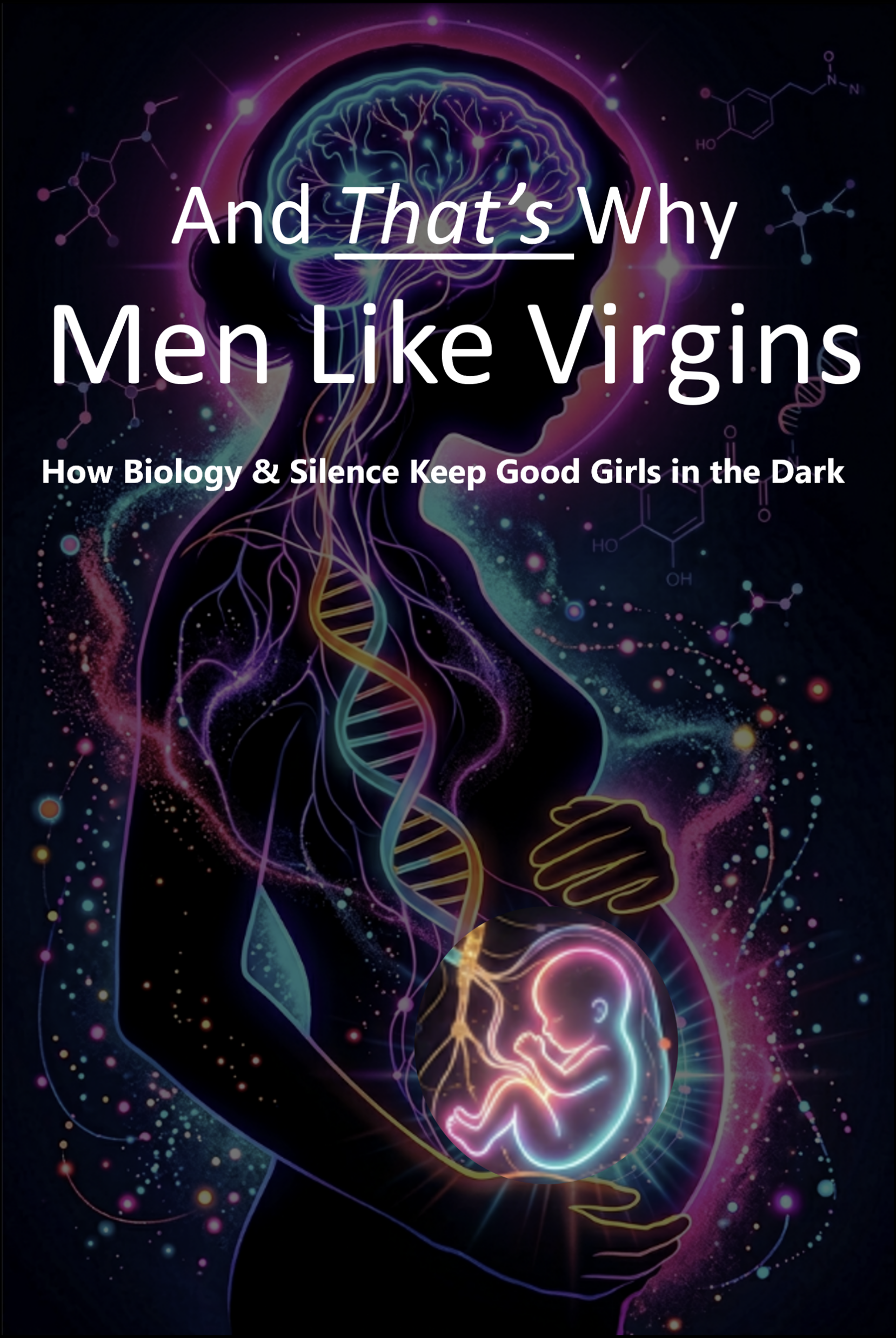
Turner (2026) develops this argument in And That’s Why Men Like Virgins, tracing how silence about the biology of bonding leaves women without the information required to pace intimacy against commitment. The present analysis extends that work with the commitment, uncertainty, sociosexuality, and endocrine literatures.
Implications for Women’s Wellness and Bio-Relational Education
Exclusivity should be taught as a structural requirement rather than as a preference to negotiate. The reason is not moral. It is that commitment is the variable that secures attachment, and attachment is going to form regardless (Stanley et al., 2010; Feldman, 2012).
Four teaching priorities follow.
Teach sequencing. Intimacy should escalate at the pace commitment is established, so that attachment and behavioral evidence accumulate together. The alternative is a fully bonded woman evaluating a man she has not yet observed under stress.
Teach the behavioral signature of commitment. Women are frequently taught to listen to words and feel for warmth. They should instead be taught to look for the closing of alternatives, which is visible, and for protective behavior under temptation, which is measurable (Scheele et al., 2012, 2013; Le & Agnew, 2003).
Teach that ambiguity is a cost being paid, not a phase being endured. Relational uncertainty degrades interpretation and raises jealousy while producing no clarity (Knobloch & Solomon, 2005; Theiss & Solomon, 2006). A woman who understands that ambiguity is actively harming her judgment has a reason to set a deadline.
Teach the right to leave without a grievance. A woman does not need him to have behaved badly in order to exit. Misalignment is sufficient. And she should be warned that fear of being single will argue against leaving with surprising sophistication (Spielmann et al., 2013).
For educators and clinicians, the practical shift is to treat undefined arrangements as a risk category rather than a lifestyle choice, and to screen for motivation. The casual sex literature is clear that harm concentrates among those whose participation is non-autonomous, meaning they are there for approval, avoidance, or hope rather than for the arrangement itself (Vrangalova, 2015; Vrangalova & Ong, 2014; Wesche et al., 2021).
Conclusion
The point of dating someone who does not want to be exclusive with you is limited at best and costly at worst.
Dating is functional when it serves as a bounded evaluation period ending in a decision. Remove the decision and the intimacy continues without the structure that was supposed to justify it. What remains is an arrangement in which one person accumulates attachment, investment, and exit cost while the other accumulates nothing and risks nothing.
The biology is what makes this more than a fairness complaint. Bonding activates on contact, not on agreement, and it runs through different peptides in men and women, with the female mechanism driven by the very hormone that intimate contact releases most (Insel & Hulihan, 1995; Walum et al., 2012; Carmichael et al., 1987). Meanwhile the man’s own endocrine profile reports on whether he has actually shifted from mating effort to investment, and in the absence of commitment it usually has not (Grebe et al., 2019; van Anders & Watson, 2006).
Commitment is measurable. Alternatives are the variable that suppresses it, and non-exclusivity is the deliberate preservation of alternatives. When someone declines exclusivity, he has answered the question.
Believe the answer. Require that relationship privileges match relationship status. Leave arrangements that do not serve the goal, and leave them early, while the judgment required to leave is still intact.
Exclusivity is not an unreasonable demand. It is the minimum condition under which the cost of bonding is worth paying.
References
Birnbaum, G. E., Reis, H. T., Mikulincer, M., Gillath, O., & Orpaz, A. (2006). When sex is more than just sex: Attachment orientations, sexual experience, and relationship quality. Journal of Personality and Social Psychology, 91(5), 929-943. https://doi.org/10.1037/0022-3514.91.5.929
Blumenthal, S. A., & Young, L. J. (2023). The neurobiology of love and pair bonding from human and animal perspectives. Biology, 12(6), 844. https://doi.org/10.3390/biology12060844
Burnham, T. C., Chapman, J. F., Gray, P. B., McIntyre, M. H., Lipson, S. F., & Ellison, P. T. (2003). Men in committed, romantic relationships have lower testosterone. Hormones and Behavior, 44(2), 119-122. https://doi.org/10.1016/S0018-506X(03)00125-9
Campbell, L., Chin, K., & Stanton, S. C. E. (2016). Initial evidence that individuals form new relationships with partners that more closely match their ideal preferences. Collabra, 2(1), 2. https://doi.org/10.1525/collabra.24
Carmichael, M. S., Humbert, R., Dixen, J., Palmisano, G., Greenleaf, W., & Davidson, J. M. (1987). Plasma oxytocin increases in the human sexual response. The Journal of Clinical Endocrinology and Metabolism, 64(1), 27-31. https://doi.org/10.1210/jcem-64-1-27
Eastwick, P. W., & Finkel, E. J. (2008). The attachment system in fledgling relationships: An activating role for attachment anxiety. Journal of Personality and Social Psychology, 95(3), 628-647. https://doi.org/10.1037/0022-3514.95.3.628
Eastwick, P. W., Finkel, E. J., & Eagly, A. H. (2011). When and why do ideal partner preferences affect the process of initiating and maintaining romantic relationships? Journal of Personality and Social Psychology, 101(5), 1012-1032. https://doi.org/10.1037/a0024062
Edelstein, R. S., Chopik, W. J., & Kean, E. L. (2011). Sociosexuality moderates the association between testosterone and relationship status in men and women. Hormones and Behavior, 60(3), 248-255. https://doi.org/10.1016/j.yhbeh.2011.05.007
Eisenberger, N. I., Lieberman, M. D., & Williams, K. D. (2003). Does rejection hurt? An fMRI study of social exclusion. Science, 302(5643), 290-292. https://doi.org/10.1126/science.1089134
Feldman, R. (2012). Oxytocin and social affiliation in humans. Hormones and Behavior, 61(3), 380-391. https://doi.org/10.1016/j.yhbeh.2012.01.008
Fielder, R. L., & Carey, M. P. (2010). Predictors and consequences of sexual “hookups” among college students: A short-term prospective study. Archives of Sexual Behavior, 39(5), 1105-1119. https://doi.org/10.1007/s10508-008-9448-4
Gettler, L. T., McDade, T. W., Feranil, A. B., & Kuzawa, C. W. (2011). Longitudinal evidence that fatherhood decreases testosterone in human males. Proceedings of the National Academy of Sciences, 108(39), 16194-16199. https://doi.org/10.1073/pnas.1105403108
Gray, P. B., Chapman, J. F., Burnham, T. C., McIntyre, M. H., Lipson, S. F., & Ellison, P. T. (2004). Human male pair bonding and testosterone. Human Nature, 15(2), 119-131. https://doi.org/10.1007/s12110-004-1016-6
Grebe, N. M., Sarafin, R. E., Strenth, C. R., & Zilioli, S. (2019). Pair-bonding, fatherhood, and the role of testosterone: A meta-analytic review. Neuroscience and Biobehavioral Reviews, 98, 221-233. https://doi.org/10.1016/j.neubiorev.2019.01.010
Impett, E. A., & Peplau, L. A. (2003). Sexual compliance: Gender, motivational, and relationship perspectives. Journal of Sex Research, 40(1), 87-100. https://doi.org/10.1080/00224490309552169
Insel, T. R., & Hulihan, T. J. (1995). A gender-specific mechanism for pair bonding: Oxytocin and partner preference formation in monogamous voles. Behavioral Neuroscience, 109(4), 782-789. https://doi.org/10.1037/0735-7044.109.4.782
Joel, S., & Machia, L. (2025). How do invested partners become invested? A prospective investigation of fledgling relationship development. Personality and Social Psychology Bulletin, 51(9), 1689-1702. https://doi.org/10.1177/01461672231224351
Joel, S., Eastwick, P. W., Allison, C. J., Arriaga, X. B., Baker, Z. G., Bar-Kalifa, E., Bergeron, S., Birnbaum, G. E., Brock, R. L., Brumbaugh, C. C., Carmichael, C. L., Chen, S., Clarke, J., Cobb, R. J., Coolsen, M. K., Davis, J., de Jong, D. C., Debrot, A., DeHaas, E. C., … Wolf, S. (2020). Machine learning uncovers the most robust self-report predictors of relationship quality across 43 longitudinal couples studies. Proceedings of the National Academy of Sciences, 117(32), 19061-19071. https://doi.org/10.1073/pnas.1917036117
Joel, S., Impett, E. A., Spielmann, S. S., & MacDonald, G. (2018). How interdependent are stay/leave decisions? On staying in the relationship for the sake of the romantic partner. Journal of Personality and Social Psychology, 115(5), 805-824. https://doi.org/10.1037/pspi0000139
Knobloch, L. K., & Solomon, D. H. (1999). Measuring the sources and content of relational uncertainty. Communication Studies, 50(4), 261-278. https://doi.org/10.1080/10510979909388499
Knobloch, L. K., & Solomon, D. H. (2005). Relational uncertainty and relational information processing: Questions without answers? Communication Research, 32(3), 349-388. https://doi.org/10.1177/0093650205275384
Kross, E., Berman, M. G., Mischel, W., Smith, E. E., & Wager, T. D. (2011). Social rejection shares somatosensory representations with physical pain. Proceedings of the National Academy of Sciences, 108(15), 6270-6275. https://doi.org/10.1073/pnas.1102693108
Le, B., & Agnew, C. R. (2003). Commitment and its theorized determinants: A meta-analysis of the investment model. Personal Relationships, 10(1), 37-57. https://doi.org/10.1111/1475-6811.00035
Machia, L. V., & Ogolsky, B. G. (2021). The reasons people think about staying and leaving their romantic relationships: A mixed-method analysis. Personality and Social Psychology Bulletin, 47(8), 1279-1293. https://doi.org/10.1177/0146167220966903
Overall, N. C., Fletcher, G. J. O., Simpson, J. A., & Sibley, C. G. (2009). Regulating partners in intimate relationships: The costs and benefits of different communication strategies. Journal of Personality and Social Psychology, 96(3), 620-639. https://doi.org/10.1037/a0012961
Owen, J., & Fincham, F. D. (2011). Young adults’ emotional reactions after hooking up encounters. Archives of Sexual Behavior, 40(2), 321-330. https://doi.org/10.1007/s10508-010-9652-x
Paik, A. (2010). “Hookups,” dating, and relationship quality: Does the type of sexual involvement matter? Social Science Research, 39(5), 739-753. https://doi.org/10.1016/j.ssresearch.2010.03.011
Penke, L., & Asendorpf, J. B. (2008). Beyond global sociosexual orientations: A more differentiated look at sociosexuality and its effects on courtship and romantic relationships. Journal of Personality and Social Psychology, 95(5), 1113-1135. https://doi.org/10.1037/0022-3514.95.5.1113
Pietromonaco, P. R., DeBuse, C. J., & Powers, S. I. (2013). Does attachment get under the skin? Adult romantic attachment and cortisol responses to stress. Current Directions in Psychological Science, 22(1), 63-68. https://doi.org/10.1177/0963721412463229
Regan, P. C., Levin, L., Sprecher, S., Christopher, F. S., & Cate, R. M. (2000). Partner preferences: What characteristics do men and women desire in their short-term sexual and long-term romantic partners? Journal of Psychology and Human Sexuality, 12(3), 1-21. https://doi.org/10.1300/J056v12n03_01
Rhoades, G. K., Stanley, S. M., & Markman, H. J. (2009). The pre-engagement cohabitation effect: A replication and extension of previous findings. Journal of Family Psychology, 23(1), 107-111. https://doi.org/10.1037/a0014358
Rhoades, G. K., Stanley, S. M., & Markman, H. J. (2012). The impact of the transition to cohabitation on relationship functioning: Cross-sectional and longitudinal findings. Journal of Family Psychology, 26(3), 348-358. https://doi.org/10.1037/a0028316
Rusbult, C. E. (1980). Commitment and satisfaction in romantic associations: A test of the investment model. Journal of Experimental Social Psychology, 16(2), 172-186. https://doi.org/10.1016/0022-1031(80)90007-4
Sandberg-Thoma, S. E., & Kamp Dush, C. M. (2014). Casual sexual relationships and mental health in adolescence and emerging adulthood. Journal of Sex Research, 51(2), 121-130. https://doi.org/10.1080/00224499.2013.821440
Scheele, D., Striepens, N., Gunturkun, O., Deutschlander, S., Maier, W., Kendrick, K. M., & Hurlemann, R. (2012). Oxytocin modulates social distance between males and females. The Journal of Neuroscience, 32(46), 16074-16079. https://doi.org/10.1523/JNEUROSCI.2755-12.2012
Scheele, D., Wille, A., Kendrick, K. M., Stoffel-Wagner, B., Becker, B., Gunturkun, O., Maier, W., & Hurlemann, R. (2013). Oxytocin enhances brain reward system responses in men viewing the face of their female partner. Proceedings of the National Academy of Sciences, 110(50), 20308-20313. https://doi.org/10.1073/pnas.1314190110
Schneiderman, I., Zagoory-Sharon, O., Leckman, J. F., & Feldman, R. (2012). Oxytocin during the initial stages of romantic attachment: Relations to couples’ interactive reciprocity. Psychoneuroendocrinology, 37(8), 1277-1285. https://doi.org/10.1016/j.psyneuen.2011.12.021
Simpson, J. A., & Gangestad, S. W. (1991). Individual differences in sociosexuality: Evidence for convergent and discriminant validity. Journal of Personality and Social Psychology, 60(6), 870-883. https://doi.org/10.1037/0022-3514.60.6.870
Spielmann, S. S., MacDonald, G., Maxwell, J. A., Joel, S., Peragine, D., Muise, A., & Impett, E. A. (2013). Settling for less out of fear of being single. Journal of Personality and Social Psychology, 105(6), 1049-1073. https://doi.org/10.1037/a0034628
Stanley, S. M., Rhoades, G. K., & Markman, H. J. (2006). Sliding versus deciding: Inertia and the premarital cohabitation effect. Family Relations, 55(4), 499-509. https://doi.org/10.1111/j.1741-3729.2006.00418.x
Stanley, S. M., Rhoades, G. K., & Whitton, S. W. (2010). Commitment: Functions, formation, and the securing of romantic attachment. Journal of Family Theory and Review, 2(4), 243-257. https://doi.org/10.1111/j.1756-2589.2010.00060.x
Taylor, S. E., Klein, L. C., Lewis, B. P., Gruenewald, T. L., Gurung, R. A. R., & Updegraff, J. A. (2000). Biobehavioral responses to stress in females: Tend-and-befriend, not fight-or-flight. Psychological Review, 107(3), 411-429. https://doi.org/10.1037/0033-295X.107.3.411
Theiss, J. A., & Solomon, D. H. (2006). Coupling longitudinal data and multilevel modeling to examine the antecedents and consequences of jealousy experiences in romantic relationships: A test of the relational turbulence model. Human Communication Research, 32(4), 469-503. https://doi.org/10.1111/j.1468-2958.2006.00284.x
Turner, D. R. (2026). And that’s why men like virgins: How biology and silence keep good girls in the dark. VirtualVillageMom Publishing.
van Anders, S. M., & Watson, N. V. (2006). Relationship status and testosterone in North American heterosexual and non-heterosexual men and women: Cross-sectional and longitudinal data. Psychoneuroendocrinology, 31(6), 715-723. https://doi.org/10.1016/j.psyneuen.2006.01.008
Vrangalova, Z. (2015). Does casual sex harm college students’ well-being? A longitudinal investigation of the role of motivation. Archives of Sexual Behavior, 44(4), 945-959. https://doi.org/10.1007/s10508-013-0255-1
Vrangalova, Z., & Ong, A. D. (2014). Who benefits from casual sex? The moderating role of sociosexuality. Social Psychological and Personality Science, 5(8), 883-891. https://doi.org/10.1177/1948550614537308
Walum, H., Lichtenstein, P., Neiderhiser, J. M., Reiss, D., Ganiban, J. M., Spotts, E. L., Pedersen, N. L., Anckarsater, H., Larsson, H., & Westberg, L. (2012). Variation in the oxytocin receptor gene is associated with pair-bonding and social behavior. Biological Psychiatry, 71(5), 419-426. https://doi.org/10.1016/j.biopsych.2011.09.002
Walum, H., Westberg, L., Henningsson, S., Neiderhiser, J. M., Reiss, D., Igl, W., Ganiban, J. M., Spotts, E. L., Pedersen, N. L., Eriksson, E., & Lichtenstein, P. (2008). Genetic variation in the vasopressin receptor 1a gene (AVPR1A) associates with pair-bonding behavior in humans. Proceedings of the National Academy of Sciences, 105(37), 14153-14156. https://doi.org/10.1073/pnas.0803081105
Wesche, R., Claxton, S. E., & Waterman, E. A. (2021). Emotional outcomes of casual sexual relationships and experiences: A systematic review. Journal of Sex Research, 58(8), 1069-1084. https://doi.org/10.1080/00224499.2020.1821163
Winslow, J. T., Hastings, N., Carter, C. S., Harbaugh, C. R., & Insel, T. R. (1993). A role for central vasopressin in pair bonding in monogamous prairie voles. Nature, 365(6446), 545-548. https://doi.org/10.1038/365545a0
Young, L. J., & Wang, Z. (2004). The neurobiology of pair bonding. Nature Neuroscience, 7(10), 1048-1054. https://doi.org/10.1038/nn1327
About the Author
Donna R. Turner, Ed.S., MPH, CHES, HSMI, CDVA is the founder of the Center for Bio-Relational Health (CBRH) and the developer of the Bio-Relational Science educational framework. Her work integrates educational psychology, public health, neuroscience, reproductive biology, and relationship science to improve health literacy and relationship decision-making.
A Certified Health Education Specialist (CHES), Turner has spent more than two decades developing educational programs that translate complex scientific research into practical knowledge for the public. Her research interests include pair bonding, neuroendocrinology, reproductive health, human papillomavirus (HPV), stress physiology, and evidence-based relationship education.
She is the author of And That’s Why Men Like Virgins: How Biology & Silence Keep Good Girls in the Dark, the inventor of a patent-pending over-the-counter HPV sperm testing technology, and the creator of the Truth Talk relationship education series.
Learn more about the Center for Bio-Relational Health, explore additional Featured Articles, browse the Relationship Question Library for practical, evidence-informed answers grounded in Bio-Relational Science, or explore the app for free relationship lessons and unlock Ask Donna René for personalize guidance to your relationship questions.
Continue Exploring Bio-Relational Science
Want the broader relationship framework?
Explore attraction, attachment, intimacy, heartbreak, male romantic behavior, stress, trauma, and relationship decision-making in one practical book written for adult women.
Explore the Book