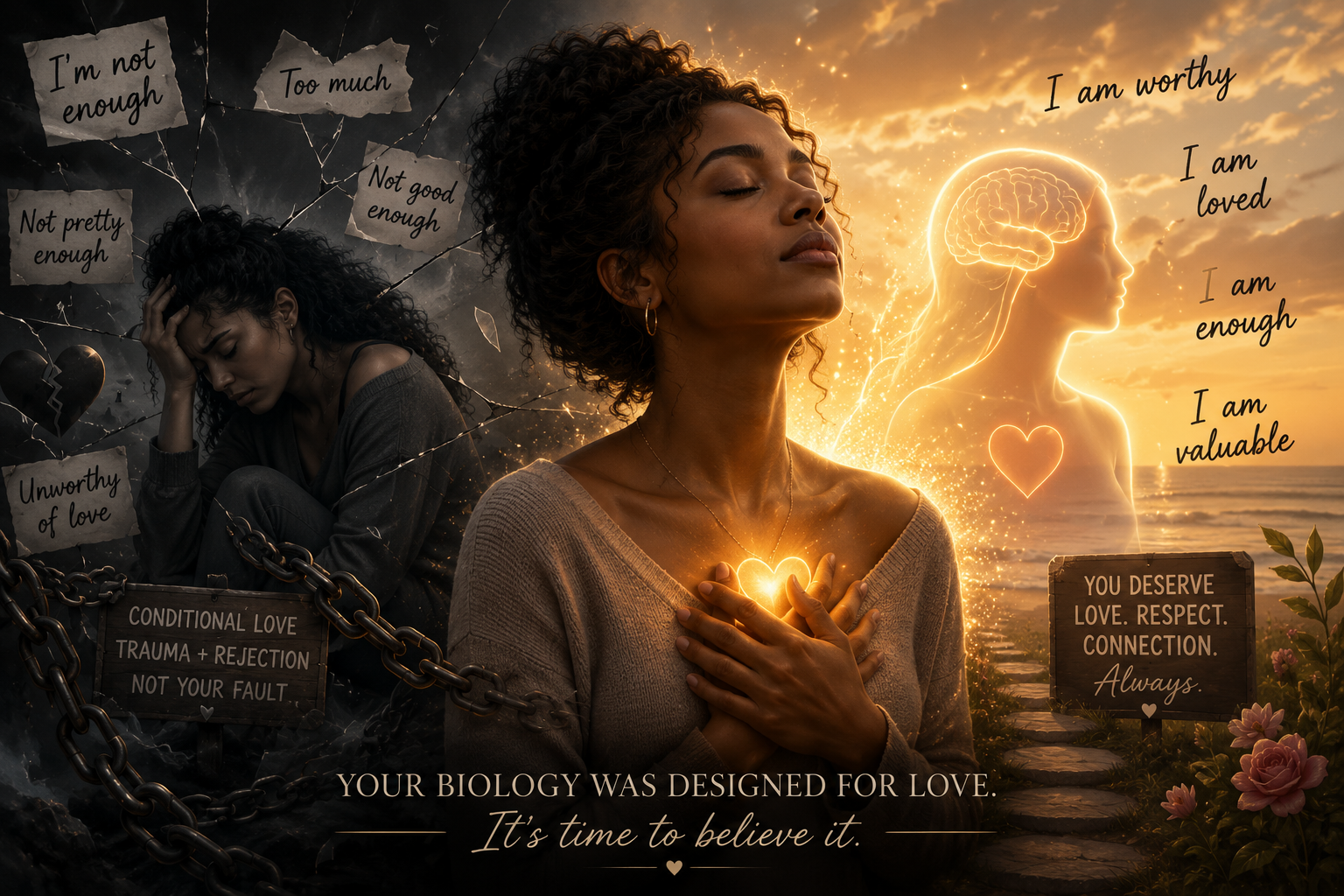
Why do I feel like I do not deserve to be loved and respected?
If you feel like you do not deserve to be loved and respected, that feeling is not the truth about who you are. More often, it reflects conditioning, emotional wounds, and a nervous system that learned to mistake survival for self-worth. Through the lens of Bio-Relational Science, these beliefs can be understood, challenged, and ultimately healed.
You feel this way, not because it is true, but because your nervous system was trained somehow to believe it. The absolute truth is that you do deserve to be loved and respected. Full stop.
For women in particular, the desire to be loved is not a weakness, a character flaw, or an insecurity; it is literally hardwired into our biology. Women are designed with an extraordinary capacity for connection, starting out with a far more sensitive oxytocin system than men and, in many cases, up to twice as many receptors for oxytocin, the love and bonding hormone. You were built to crave love, affection, and safety, and you were built to be loved in return.
So, when a woman feels like she doesn’t deserve the very thing her body was designed to experience, it is because an artificial, unhealed story has overridden her natural biology.
Here is how that disconnect happens beneath the surface:
- You Were Trained to Trade Your Worth for Safety
Long before adulthood, your nervous system was learning what connection felt like. If you grew up in an environment where affection was conditional, where you had to be “good,” accommodating, or silent to keep the peace, your brain adapted.
To a developing mind, believing “I am the problem” feels safer than accepting that caregivers or partners are incapable of loving you properly. If the problem is you, then you hold the power to fix it by doing more, giving more, or asking for less. You learned to mistake self-blame for control.
- The Trauma of the Intermittent Reward Cycle
If you have given your heart to men who ran hot and cold, ghosted, or treated you like a convenient transaction, your brain’s reward system was repeatedly hijacked. Unpredictable affection acts like a trap. Every time an emotionally distant man gave you a small crumb of warmth after a period of coldness, your body experienced a surge of dopamine and oxytocin, hooking you to the cycle of pain and relief.
When those transactional situations inevitably fail or leave you carrying the emotional wreckage, self-blame steps in again. You assume that if you were prettier, smarter, calmer, or more patient, he would have chosen you. You take his biological inability to bond and misinterpret it as your failure to be worth loving.
- Your Bonding System Was Used Against You
Your oxytocin-rich system is designed to attach, protect, and repair. When you pour your time, loyalty, and heart into someone who does not respect you, your bonding system keeps pushing you to try harder to make it work. When those efforts do not change his character, the disconnect creates profound shame. You end up feeling broken simply because your body did exactly what it was designed to do for a man who never earned that access.
Reclaiming Your Design
Feeling unloved or unworthy is not the truth of who you are; it is simply the scar tissue left behind by unhealed wounds, biological misdirection, and men who were never equipped to love you. Your biological craving for deep, respectful love is sacred. You do not have to audition for basic human decency, nor do you have to earn the right to be cherished.
Scientific References
- Gao, S., Becker, B., Luo, L., et al. (2016). Oxytocin, the peptide that bonds the sexes also divides them. Proceedings of the National Academy of Sciences, 113(27), 7650-7654.
https://pubmed.ncbi.nlm.nih.gov/27325780/ - Schneiderman, I., Zagoory-Sharon, O., Leckman, J. F., & Feldman, R. (2012). Oxytocin during the initial stages of romantic attachment: Relations to couples’ interactive reciprocity. Psychoneuroendocrinology, 37(8), 1277-1285.
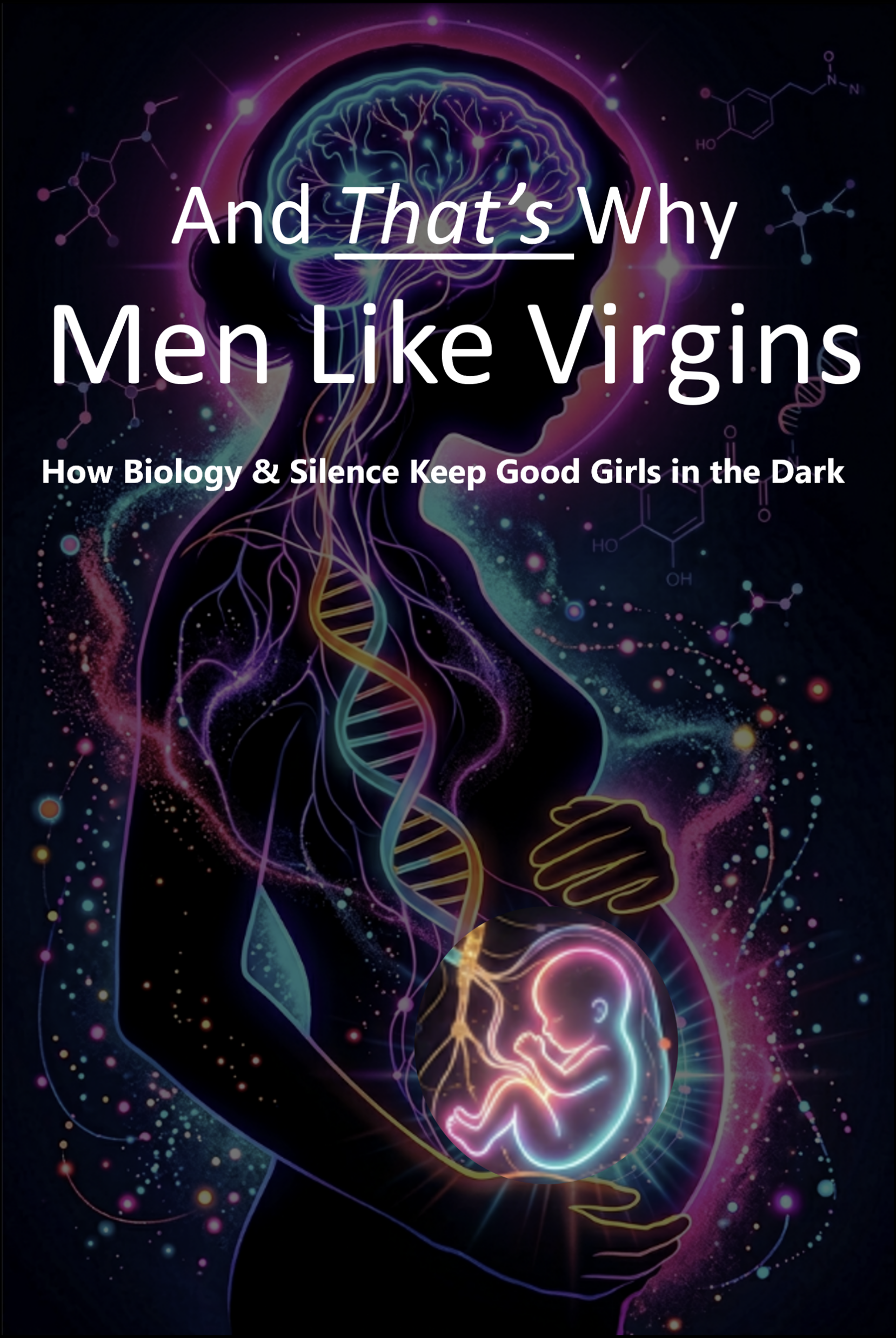
https://pubmed.ncbi.nlm.nih.gov/22281209/ - Turner, D. R. (2026). And That’s Why Men Like Virgins: How Biology & Silence Keep Good Girls in the Dark.
https://virtualvillagemom.com/
Related Questions
- What is the difference between “I like you” and “I love you”?
- I’m Looking for Love. What Should I Do?
- What does it really mean to choose a partner based on alignment and consistency instead of chemistry alone?
- Do people fall out of love, or do they just stop trying?
- What’s the key to a long-lasting relationship or marriage?
Continue Exploring Bio-Relational Science
And That’s Why Men Like Virgins
Explore attraction, attachment, intimacy, heartbreak, male romantic behavior, stress, trauma, and relationship decision-making in one practical book written for adult women.