I’m Looking for Love. What Should I Do?
A Bio-Relational Framework for Self-Readiness, Attachment, and Romantic Discernment
Estimated reading time: 23 minutes | April 3, 2026
Evidence Note: This article integrates peer reviewed findings from developmental neuroscience, neuroendocrinology, reproductive immunology, virology, stress physiology, and public health. Every claim is tied to a cited primary source, and every source is listed in full with its digital object identifier at the end of the article. The Bio-Relational Science framework presented here is an original educational synthesis that translates this body of research into language the general reader can act on.
Abstract
The search for love is usually treated as a search problem, as though the difficulty were locating a suitable person. Relationship science points somewhere else. Across forty-three longitudinal couples studies analyzed with machine learning, the most robust predictors of relationship quality were the seeker’s own perceptions and dispositions rather than the traits of the partner (Joel et al., 2020). Self-esteem is prospectively associated with romantic relationship quality (Erol & Orth, 2016), and fear of being single predicts settling for less responsive and less compatible partners in experimental and longitudinal designs (Spielmann et al., 2013). Attachment history shapes who appears appealing, how closeness is interpreted, and how relationships are sustained (Hazan & Shaver, 1987; Simpson, 1990; Collins & Read, 1990; Holmes & Johnson, 2009). Bonding runs on identifiable neuroendocrine machinery. Vasopressin governs pair bonding in male prairie voles and variation in the human vasopressin receptor gene predicts pair-bonding behavior in men, while oxytocin governs partner preference formation in females and variation in the human oxytocin receptor gene predicts pair-bonding in women (Winslow et al., 1993; Walum et al., 2008; Insel & Hulihan, 1995; Walum et al., 2012). Intranasal oxytocin amplifies sex differences in human mate choice (Xu et al., 2020). Early-stage romantic love recruits dopamine-rich reward and motivation circuitry, which explains why intensity is a poor index of suitability (Aron et al., 2005; Fisher et al., 2006; Fisher et al., 2016). Stated ideals also diverge from actual choices in live romantic contexts (Eastwick et al., 2011; Luo & Zhang, 2009). This article argues, within the Bio-Relational Science framework, that looking for love is a two-part task: build the internal readiness that makes good love recognizable, then evaluate a candidate by sustained behavior rather than by felt intensity. Perceived partner responsiveness, the measurable signature of being cherished, predicts cortisol profiles a decade later and all-cause mortality across twenty years (Slatcher et al., 2015; Stanton et al., 2019).
Keywords: romantic love, attachment, self-readiness, partner selection, oxytocin, vasopressin, pair bonding, perceived partner responsiveness, bio-relational science, women’s wellness
Introduction
“I am looking for love. What should I do?”
The question sounds like a request for tactics. Where should I go, which app should I use, how should I present myself. Those are the wrong first questions, and the research explains why.
Begin with a definition problem. Familial love, friendship, compassion, and romantic love are distinct systems with distinct biology and distinct requirements. A woman who has not specified which one she is looking for will accept whichever one arrives, and the one that arrives fastest is rarely the one she wanted.
Then there is a harder problem. The search for love is conducted by a nervous system that already has opinions. Attachment history determines who registers as compelling, how ambiguity gets read, and what feels like safety (Hazan & Shaver, 1987; Collins & Read, 1990). Reward circuitry determines what intensity feels like and how quickly it arrives (Aron et al., 2005). And a woman’s current emotional state determines her threshold. Spielmann et al. (2013) demonstrated that fear of being single leads people to settle for less, in experiments and in longitudinal data. The seeker is not a neutral instrument.
Bio-Relational Science treats this as the central fact rather than a complication. Love is not found by a fixed observer scanning a field of candidates. It is found by a biological system that was calibrated by earlier relationships and is currently in some emotional state, and that system can be prepared or unprepared for the job.
So the answer to “what should I do” has two halves. Build the readiness that makes good love recognizable and receivable. Then use evidence rather than sensation to evaluate what shows up. This article sets out what the research says about each half (Turner, 2026).
Conceptual Framework
Four constructs organize the analysis.
Self-readiness is the internal condition a person brings to the search, including self-esteem, emotional steadiness, and freedom from the urgency that distorts judgment. Self-esteem prospectively predicts romantic relationship quality, and low self-esteem predicts later depression rather than merely accompanying it (Erol & Orth, 2016; Sowislo & Orth, 2013).
Attachment orientation is the working model of closeness and one’s own value that develops out of caregiving history and then governs adult romantic behavior. It shapes partner preference, relationship quality, and emotion regulation (Hazan & Shaver, 1987; Simpson, 1990; Holmes & Johnson, 2009; Mikulincer & Shaver, 2019).
Pair-bonding neuroendocrinology is the oxytocin, vasopressin, and dopamine machinery that forms and maintains selective bonds. It is established experimentally in monogamous rodents and confirmed in human genetic and pharmacological studies (Young & Wang, 2004; Winslow et al., 1993; Insel & Hulihan, 1995; Walum et al., 2008; Walum et al., 2012; Scheele et al., 2013).
Relational discernment is the skill of evaluating a candidate by sustained, measurable behavior rather than by felt intensity or stated intention. Its single best-validated target is perceived partner responsiveness, which predicts long-term physiological and mortality outcomes (Maisel & Gable, 2009; Slatcher et al., 2015; Stanton et al., 2019).
The argument is that the first two determine what a woman can perceive, the third determines how hard the pull will be, and the fourth is the skill that keeps the first three from choosing for her.
Discussion
Name the love you are looking for
Romantic love is not a general warmth. It is a selective bond with its own neural signature.
Aron et al. (2005) imaged people in early-stage intense romantic love and found activation in dopamine-rich regions including the ventral tegmental area and caudate nucleus, the motivation and reward system rather than the emotion system. Fisher, Aron, and Brown (2005) imaged the same neural mechanism for mate choice, and Fisher et al. (2006) characterized it as a mammalian brain system distinct from both sexual desire and long-term attachment.
That distinctness matters practically. A woman seeking companionship, a woman seeking a co-parent, and a woman seeking the experience of being swept up are seeking outputs of different systems, and the systems can run separately. Acevedo and Aron (2009) reviewed the evidence that romantic love can persist in long-term relationships rather than necessarily decaying into companionate affection, and Acevedo et al. (2012) found neural correlates of long-term intense romantic love in the same reward regions active in early love.
So the first instruction is specification. A search without a specified target returns whatever is nearest.
Readiness is measurable, not a mood
The advice to work on yourself first is usually offered as sentiment. It is better supported than that.
Erol and Orth (2016) reviewed the evidence linking self-esteem to the quality of romantic relationships and found the association operating in both directions, with self-esteem predicting subsequent relationship quality. Orth and Robins (2014) established that self-esteem develops in patterned ways across the lifespan, meaning it is a movable quantity rather than a fixed trait. Sowislo and Orth (2013) established in meta-analysis of longitudinal studies that low self-esteem predicts later depression.
Shen, Liu, and Brat (2021) tested attachment, self-esteem, and psychological distress in a multiple-mediator model and found greater attachment security associated with stronger self-esteem and less distress. Readiness, in other words, is not an attitude a woman adopts. It is a set of measurable conditions with measurable consequences for what her relationships will be like.
The practical version is uncomfortable but useful. A woman who is depleted will not perceive accurately. That is not a character judgment. It is a statement about what a depleted system is capable of detecting.
Fear of being single is the most expensive state to search from
Spielmann et al. (2013) ran six studies on fear of being single and found something direct and unwelcome. People higher in fear of being single showed greater willingness to settle for less, including expressing romantic interest in less responsive and less attractive partners, staying in less satisfying relationships, and remaining dependent on partners who were poor matches.
This is the mechanism behind an outcome many women recognize afterward. The choice did not feel like settling at the time, because the fear altered the threshold rather than announcing itself. A raised threshold does not feel like a raised threshold. It feels like the person seeming better than they were.
Hawkley and Cacioppo (2010) reviewed the consequences and mechanisms of loneliness, and Wang et al. (2023) established across ninety cohort studies that social isolation and loneliness are mortality risk factors. The urge to end the loneliness is not irrational. It is the system correctly registering a real cost. The problem is that the system registering the cost is the same system making the selection, and under that pressure it will accept a partial solution.
The instruction that follows is precise. The work is not to stop wanting a partner. It is to reduce the urgency enough that discernment survives the wanting.
Attachment history decides who looks appealing
Hazan and Shaver (1987) established the framework by conceptualizing romantic love as an attachment process, showing that adult romantic experience maps onto the attachment patterns described in infancy. Simpson (1990) then documented the influence of attachment styles on the course and quality of romantic relationships, and Collins and Read (1990) showed that adult attachment working models predicted relationship quality in dating couples.
Holmes and Johnson (2009) reviewed adult attachment and romantic partner preference directly and found attachment orientation shaping who people are drawn to and what they seek in a partner. Mikulincer and Shaver (2019) describe how attachment orientations organize emotion regulation, which is the route from an old history to a present-day reaction.
Put plainly: a woman does not choose from a neutral position. An anxious orientation tends to find intensity compelling and inconsistency activating. An avoidant orientation tends to find closeness itself alarming and to read a partner’s reasonable need as encroachment. Neither orientation announces itself as a bias. Both feel like taste.
This is why criteria have to be written down before the search, while judgment is intact, rather than constructed in the presence of a candidate.
The bonding machinery is real, and it is sex differentiated
Young and Wang (2004) reviewed the neurobiology of pair bonding, establishing oxytocin, vasopressin, and dopamine as the core system. Blumenthal and Young (2023) updated that account across human and animal evidence, and Hammock and Young (2006) had earlier traced how variation in oxytocin and vasopressin signaling produces individual differences in social bonding.
The experimental evidence comes from monogamous prairie voles, and it is the reason the human work has a foundation to build on. Winslow et al. (1993) demonstrated in Nature that central vasopressin is required for pair bonding in male prairie voles. Insel and Hulihan (1995) then identified a sex-differentiated mechanism, showing that oxytocin drives partner preference formation in females while vasopressin does so in males. Ross et al. (2009) and Keebaugh and Young (2011) showed that oxytocin receptor density in the nucleus accumbens determines how readily a bond forms at all, meaning bonding capacity is a biological parameter that varies between individuals.
The human genetics track the animal work with striking fidelity. Walum et al. (2008) found in the Proceedings of the National Academy of Sciences that variation in the vasopressin receptor 1a gene was associated with pair-bonding behavior, marital quality, and marital status in men. Walum et al. (2012) found that variation in the oxytocin receptor gene was associated with pair-bonding and social behavior in women. The same peptide-by-sex split found in voles appears in the human genome.
Scheele et al. (2012) found that intranasal oxytocin modulated the social distance men maintained from an attractive woman, with the effect depending on whether the man was in a relationship. Scheele et al. (2013) found that oxytocin enhanced reward system responses in men viewing their own partner’s face specifically, not other women’s faces, which is the neural signature of selectivity. Schneiderman et al. (2012) found oxytocin levels during the initial stages of romantic attachment tracking couples’ interactive reciprocity, and Bosch and Young (2018) reviewed the full arc from attachment to bond disruption.
Hormones do not replace choice. They organize salience, which is more consequential. They determine which person becomes hard to stop thinking about, and a woman who does not know this is running a selection process whose weighting she cannot see.
Men and women do not bond through identical routes
This is where the literature is often flattened, and the flattening costs women accuracy.
The peptide split is not a subtlety. Insel and Hulihan (1995) titled their finding a gender-specific mechanism for pair bonding because that is what they found: oxytocin for female partner preference, vasopressin for male. Walum et al. (2008, 2012) found the human genetic associations following the same division, vasopressin receptor variation in men and oxytocin receptor variation in women.
Xu et al. (2020) tested this pharmacologically in humans and found that intranasal oxytocin amplified sex differences in mate choice, with men and women responding differently to partner fidelity information. Buss (1989) established across thirty-seven cultures that men and women report systematically different mate preference priorities, a pattern replicated across widely varying cultural conditions.
The practical translation is behavioral. Male investment tends to become visible through sustained action, provision, protection, and the ordering of priorities once a bond forms, and Walum et al. (2008) tied that capacity to a measurable genetic parameter. Female bonding tends to build through repeated emotional proximity and responsiveness, and that route runs through the oxytocin system that Insel and Hulihan and Walum et al. (2012) identified.
This asymmetry has a consequence a woman should know before she starts. She may bond faster through interaction alone than a man will, which means the interval during which she is attached and he is still deciding is a real and biologically grounded window of exposure. Pacing is not a game. It is protection of an asymmetry that exists.
Intensity is a reward signal, not a verdict on fit
Aron et al. (2005) located early-stage romantic love in the reward and motivation system. Fisher et al. (2016) went on to characterize intense romantic love as a natural addiction, arguing that the fields studying romance and studying substance use describe overlapping circuitry.
That framing is clarifying rather than cynical. It means the strength of the pull is generated by a reward system responding to cues, and reward systems can be driven hard by things that are bad for the organism. The subjective certainty that accompanies intense attraction is produced by the same machinery whether the candidate is suitable or catastrophic.
Fisher et al. (2010) imaged the reward, addiction, and emotion regulation systems engaged by rejection in love, showing that the circuitry stays active when the bond is threatened rather than shutting off. So intensity does not merely fail to indicate fit. It actively persists after the evidence of poor fit has arrived.
The instruction is to demote the signal. Intensity is information about activation, not about compatibility, and the two have to be measured separately.
Proximity manufactures attraction on its own
Moreland and Beach (1992) ran a classroom study in which a woman attended a course without speaking to anyone, varying only how many sessions she attended. Students rated her more favorably the more often they had merely been in the room with her. Exposure alone, with no interaction, produced liking.
This is the mechanism behind falling for whoever is nearby. A coworker, a neighbor, a friend of a friend who keeps appearing. The familiarity generated by repetition is experienced as affinity, and affinity is easily narrated as significance.
The correction is to ask a specific question. Would this person be a candidate if we had met once, deliberately, and I had to judge on what I actually know? If the answer is no, what is being felt is exposure.
Stated ideals and actual choices come apart
This is the finding most likely to protect a woman, because it explains a failure that otherwise looks like bad luck.
Eastwick, Finkel, and Eagly (2011) examined when and why ideal partner preferences affect the initiation and maintenance of romantic relationships and found that stated ideals predicted evaluations of hypothetical or remote partners far better than they predicted evaluations of a live, present person. Luo and Zhang (2009) analyzed speed-dating data and found that reciprocity and physical attractiveness dominated initial romantic attraction, while the similarity people said they wanted contributed little at first contact.
Campbell, Chin, and Stanton (2016) found initial evidence that people do form new relationships with partners more closely matching their ideal preferences, which means ideals are not useless. They are simply overridden in the moment. Regan et al. (2000) documented that the characteristics men and women desire differ systematically between short-term sexual partners and long-term romantic partners, so a woman evaluating a candidate has to know which list she is currently applying.
The practical instruction follows directly. Ideals work at a distance and fail in the room. So the criteria must be written down in advance, kept in a form that survives contact, and checked against behavior rather than against how the encounter felt.
Finkel et al. (2012) reviewed online dating from the standpoint of psychological science and reached a compatible conclusion: the matching algorithms do not do what they claim, and the profile browsing that platforms encourage promotes an assessment mindset that does not predict relationship success. The structure of the search shapes its quality.
What predicts a good relationship is mostly about the seeker
Joel et al. (2020) analyzed forty-three longitudinal couples studies with machine learning, examining more than eleven thousand couples, and found that the most robust predictors of relationship quality were a person’s own perceptions of the relationship, including perceived partner commitment, appreciation, and satisfaction. Individual difference variables of the partner contributed far less.
Read carefully, this is not a claim that partners do not matter. It is a claim that the strongest measurable signal sits on the seeker’s side of the relationship. Which returns the analysis to readiness, and gives the folk advice about working on yourself a hard empirical basis.
Murray et al. (2002) showed the mechanism for one direction of this. People with lower self-esteem, stung by rejection, withdrew regard for the partner rather than drawing closer, damaging the bond they were trying to secure. Murray et al. (1996) showed the other direction, finding that positive illusions about a partner were self-fulfilling and predicted greater satisfaction and stability over time. What a woman brings to the relationship partly determines what the relationship becomes.
Responsiveness is the measurable form of being cherished
If intensity is the wrong signal, something has to replace it. The literature supplies a specific candidate.
Maisel and Gable (2009) found that received support helped only when it was perceived as responsive, and was neutral or harmful otherwise. Support is not a quantity. It is a quality, and the quality is responsiveness.
The longitudinal evidence is unusually strong. Slatcher, Selcuk, and Ong (2015) found that perceived partner responsiveness predicted diurnal cortisol profiles ten years later. Selcuk and Ong (2013) found that it moderated the association between received emotional support and all-cause mortality. Stanton et al. (2019) found that perceived partner responsiveness predicted all-cause mortality across a twenty-year longitudinal study. Robles et al. (2014) established in meta-analysis that marital quality is associated with physical health outcomes and mortality risk.
Responsiveness is observable and it accumulates. Does he notice, accurately, without being told. Does noticing change what he does. Does it hold when it is inconvenient. Those questions can be answered by watching, and they predict outcomes measured in decades.
The body reports on whether the bond is working
The final discernment tool is physiological, and it is the one women are least often taught to consult.
Heinrichs et al. (2003) found that social support combined with oxytocin produced the lowest cortisol and subjective stress responses to a laboratory stressor. Ditzen et al. (2009) found that intranasal oxytocin increased positive communication and reduced cortisol during couple conflict. Grewen et al. (2005) found that warm partner contact affected resting oxytocin, cortisol, norepinephrine, and blood pressure. Holt-Lunstad et al. (2008) found that a warm touch intervention among married couples raised oxytocin and lowered blood pressure and cortisol. Jakubiak and Feeney (2016) reviewed affectionate touch and its relational, psychological, and physical benefits in adulthood.
Ditzen et al. (2008) add the necessary qualification: adult attachment and social support interact, so the same offered care does not land identically in every person. Receiving is a capacity, and an insecure history did not train it. Pietromonaco et al. (2013) reviewed the broader question of whether attachment gets under the skin and concluded that adult romantic attachment shows up in cortisol responses to stress, which means a woman’s relational history is measurable in her physiology before she can articulate it.
Taken together these results describe what a working bond does to a body. It lowers cortisol, raises oxytocin, and steadies the cardiovascular system. A relationship that consistently does the opposite is supplying information, and that information is more reliable than the intensity of the attraction.
Readiness can be built
The last question is whether any of this is trainable, and the answer is documented.
Levy et al. (2006) found in a randomized controlled trial that attachment patterns and reflective function changed over the course of treatment. Wesselmann and Potter (2009) documented change in adult attachment status following treatment across case studies. Mikulincer and Shaver (2007) reviewed experimental work showing that attachment security can be boosted, with downstream effects on mental health and prosocial functioning.
Neff (2003) made self-compassion measurable, and Ogolsky and Bowers (2012) established in meta-analytic review that relationship maintenance behaviors are associated with relationship quality, meaning the skills that keep a relationship working are identifiable and therefore learnable.
Readiness is not a personality someone either has or lacks. It is a set of capacities with documented plasticity, which means the honest answer to “what should I do” includes real work with a real evidence base behind it.
Relation to Bio-Relational Science
Bio-Relational Science holds that relational experience is written into biology, that the writing is measurable, and that the resulting patterns can be revised through new relational experience. Applied to the search for love, the framework makes three claims that conventional dating advice does not.
The first is that the seeker is part of the mechanism. Joel et al. (2020) found the strongest predictors of relationship quality on the seeker’s side across forty-three longitudinal studies, and Spielmann et al. (2013) showed that an internal state, fear of being single, measurably lowers standards. Conventional advice optimizes the search. Bio-Relational Science says to optimize the instrument conducting it, because the instrument is where the variance lives.
The second is that sex-differentiated bonding is a fact to plan around rather than a claim to soften. Insel and Hulihan (1995) named a gender-specific mechanism, oxytocin for female partner preference and vasopressin for male. Walum et al. (2008, 2012) found human genetic associations following the same division. Xu et al. (2020) found oxytocin amplifying sex differences in mate choice in human subjects. A framework that tells women bonding is symmetrical is not being kind. It is withholding the reason pacing matters.
The third is that intensity has to be demoted and responsiveness promoted. Aron et al. (2005) and Fisher et al. (2016) place early love in reward and addiction circuitry, so intensity measures activation. Slatcher et al. (2015), Selcuk and Ong (2013), and Stanton et al. (2019) tie perceived partner responsiveness to cortisol a decade out and to mortality across twenty years, so responsiveness measures whether the bond is doing what bonds are for. One of those is a feeling. The other is an outcome.
And the framework insists on plasticity, because the research supports it. Attachment patterns changed in a randomized trial (Levy et al., 2006), security responded to experimental intervention (Mikulincer & Shaver, 2007), and attachment status changed following treatment (Wesselmann & Potter, 2009). A woman is not being asked to accept her history. She is being told which parts of it are modifiable and by what means (Turner, 2026).
Implications for Women’s Wellness and Bio-Relational Education
Romantic education for women is usually either tactical or moral. Tactics tell her how to be chosen. Morality tells her how to wait. Neither teaches her what the research actually establishes.
Bio-Relational education replaces both with instruction she can apply. She should know that fear of being single measurably lowers her standards without announcing itself, so that recognizing the state becomes a precondition of searching (Spielmann et al., 2013). She should know that stated ideals predict evaluations at a distance and fail in the presence of a live person, which is the argument for written criteria (Eastwick et al., 2011; Luo & Zhang, 2009). She should know that mere exposure produces liking with no interaction at all, so that proximity is not read as destiny (Moreland & Beach, 1992).
She should know the bonding asymmetry. Female partner preference runs through oxytocin and male pair bonding runs through vasopressin, established experimentally in voles and confirmed in human genetic association studies (Insel & Hulihan, 1995; Winslow et al., 1993; Walum et al., 2008; Walum et al., 2012). That asymmetry is the reason her attachment can outrun his decision, and knowing it converts pacing from a rule she was handed into a protection she chooses.
She should know which signal to grade on. Perceived partner responsiveness predicts diurnal cortisol ten years later and all-cause mortality across twenty years, while intensity predicts how activated her reward system is right now (Slatcher et al., 2015; Stanton et al., 2019; Aron et al., 2005). And she should know the health stakes, because they are not abstract. Marital quality is associated with physical health outcomes and mortality risk in meta-analysis (Robles et al., 2014), and loneliness and isolation are established mortality risk factors across ninety cohort studies (Wang et al., 2023).
Finally, the curriculum should end where the evidence ends, which is with modifiability. Attachment patterns changed in a randomized trial and security responded to intervention (Levy et al., 2006; Mikulincer & Shaver, 2007). Relationship maintenance behaviors are identifiable and associated with relationship quality (Ogolsky & Bowers, 2012). A woman looking for love is not waiting to be selected. She is preparing an instrument and then using it.
Conclusion
The honest answer to “I am looking for love, what should I do” is that there are two tasks, and most people only attempt the second.
The first task is to become the kind of observer who can tell good love from strong feeling. That means addressing the urgency, because fear of being single demonstrably lowers standards (Spielmann et al., 2013). It means attending to self-esteem, because it prospectively predicts relationship quality (Erol & Orth, 2016). And it means knowing one’s own attachment orientation, because it decides in advance who will seem compelling (Hazan & Shaver, 1987; Holmes & Johnson, 2009).
The second task is to evaluate on evidence. Intensity reports on reward circuitry (Aron et al., 2005; Fisher et al., 2016). Proximity manufactures liking by itself (Moreland & Beach, 1992). Stated ideals fail in the room (Eastwick et al., 2011). What holds up is sustained, observable responsiveness, and it predicts outcomes measured in decades (Slatcher et al., 2015; Stanton et al., 2019).
And the bonding machinery should be understood rather than fought. Oxytocin and vasopressin organize selective attachment along partly sex-differentiated routes (Insel & Hulihan, 1995; Walum et al., 2008; Walum et al., 2012; Xu et al., 2020). That is not a limitation on a woman. It is the reason she gets to set the pace.
Love is not only found. It is prepared for, recognized, and then built.
References
Acevedo, B. P., & Aron, A. (2009). Does a long-term relationship kill romantic love? Review of General Psychology, 13(1), 59-65. https://doi.org/10.1037/a0014226
Acevedo, B. P., Aron, A., Fisher, H. E., & Brown, L. L. (2012). Neural correlates of long-term intense romantic love. Social Cognitive and Affective Neuroscience, 7(2), 145-159. https://doi.org/10.1093/scan/nsq092
Aron, A., Fisher, H., Mashek, D. J., Strong, G., Li, H., & Brown, L. L. (2005). Reward, motivation, and emotion systems associated with early-stage intense romantic love. Journal of Neurophysiology, 94(1), 327-337. https://doi.org/10.1152/jn.00838.2004
Blumenthal, S. A., & Young, L. J. (2023). The neurobiology of love and pair bonding from human and animal perspectives. Biology, 12(6), 844. https://doi.org/10.3390/biology12060844
Bosch, O. J., & Young, L. J. (2018). Oxytocin and social relationships: From attachment to bond disruption. Current Topics in Behavioral Neurosciences, 35, 97-117. https://doi.org/10.1007/7854_2017_10
Buss, D. M. (1989). Sex differences in human mate preferences: Evolutionary hypotheses tested in 37 cultures. Behavioral and Brain Sciences, 12(1), 1-14. https://doi.org/10.1017/S0140525X00023992
Campbell, L., Chin, K., & Stanton, S. C. E. (2016). Initial evidence that individuals form new relationships with partners that more closely match their ideal preferences. Collabra, 2(1), 2. https://doi.org/10.1525/collabra.24
Collins, N. L., & Read, S. J. (1990). Adult attachment, working models, and relationship quality in dating couples. Journal of Personality and Social Psychology, 58(4), 644-663. https://doi.org/10.1037/0022-3514.58.4.644
Ditzen, B., Schaer, M., Gabriel, B., Bodenmann, G., Ehlert, U., & Heinrichs, M. (2009). Intranasal oxytocin increases positive communication and reduces cortisol levels during couple conflict. Biological Psychiatry, 65(9), 728-731. https://doi.org/10.1016/j.biopsych.2008.10.011
Ditzen, B., Schmidt, S., Strauss, B., Nater, U. M., Ehlert, U., & Heinrichs, M. (2008). Adult attachment and social support interact to reduce psychological but not cortisol responses to stress. Journal of Psychosomatic Research, 64(5), 479-486. https://doi.org/10.1016/j.jpsychores.2007.11.011
Eastwick, P. W., Finkel, E. J., & Eagly, A. H. (2011). When and why do ideal partner preferences affect the process of initiating and maintaining romantic relationships? Journal of Personality and Social Psychology, 101(5), 1012-1032. https://doi.org/10.1037/a0024062
Erol, R. Y., & Orth, U. (2016). Self-esteem and the quality of romantic relationships. European Psychologist, 21(4), 274-283. https://doi.org/10.1027/1016-9040/a000259
Finkel, E. J., Eastwick, P. W., Karney, B. R., Reis, H. T., & Sprecher, S. (2012). Online dating: A critical analysis from the perspective of psychological science. Psychological Science in the Public Interest, 13(1), 3-66. https://doi.org/10.1177/1529100612436522
Fisher, H. E., Aron, A., & Brown, L. L. (2005). Romantic love: An fMRI study of a neural mechanism for mate choice. The Journal of Comparative Neurology, 493(1), 58-62. https://doi.org/10.1002/cne.20772
Fisher, H. E., Aron, A., & Brown, L. L. (2006). Romantic love: A mammalian brain system for mate choice. Philosophical Transactions of the Royal Society B: Biological Sciences, 361(1476), 2173-2186. https://doi.org/10.1098/rstb.2006.1938
Fisher, H. E., Brown, L. L., Aron, A., Strong, G., & Mashek, D. (2010). Reward, addiction, and emotion regulation systems associated with rejection in love. Journal of Neurophysiology, 104(1), 51-60. https://doi.org/10.1152/jn.00784.2009
Fisher, H. E., Xu, X., Aron, A., & Brown, L. L. (2016). Intense, passionate, romantic love: A natural addiction? How the fields that investigate romance and substance abuse can inform each other. Frontiers in Psychology, 7, 687. https://doi.org/10.3389/fpsyg.2016.00687
Grewen, K. M., Girdler, S. S., Amico, J., & Light, K. C. (2005). Effects of partner support on resting oxytocin, cortisol, norepinephrine, and blood pressure before and after warm partner contact. Psychosomatic Medicine, 67(4), 531-538. https://doi.org/10.1097/01.psy.0000170341.88395.47
Hammock, E. A. D., & Young, L. J. (2006). Oxytocin, vasopressin and pair bonding: Implications for autism. Philosophical Transactions of the Royal Society B: Biological Sciences, 361(1476), 2187-2198. https://doi.org/10.1098/rstb.2006.1939
Hawkley, L. C., & Cacioppo, J. T. (2010). Loneliness matters: A theoretical and empirical review of consequences and mechanisms. Annals of Behavioral Medicine, 40(2), 218-227. https://doi.org/10.1007/s12160-010-9210-8
Hazan, C., & Shaver, P. (1987). Romantic love conceptualized as an attachment process. Journal of Personality and Social Psychology, 52(3), 511-524. https://doi.org/10.1037/0022-3514.52.3.511
Heinrichs, M., Baumgartner, T., Kirschbaum, C., & Ehlert, U. (2003). Social support and oxytocin interact to suppress cortisol and subjective responses to psychosocial stress. Biological Psychiatry, 54(12), 1389-1398. https://doi.org/10.1016/S0006-3223(03)00465-7
Holmes, B. M., & Johnson, K. R. (2009). Adult attachment and romantic partner preference: A review. Journal of Social and Personal Relationships, 26(6-7), 833-852. https://doi.org/10.1177/0265407509345653
Holt-Lunstad, J., Birmingham, W. A., & Light, K. C. (2008). Influence of a warm touch support enhancement intervention among married couples on ambulatory blood pressure, oxytocin, alpha amylase, and cortisol. Psychosomatic Medicine, 70(9), 976-985. https://doi.org/10.1097/PSY.0b013e318187aef7
Insel, T. R., & Hulihan, T. J. (1995). A gender-specific mechanism for pair bonding: Oxytocin and partner preference formation in monogamous voles. Behavioral Neuroscience, 109(4), 782-789. https://doi.org/10.1037/0735-7044.109.4.782
Jakubiak, B. K., & Feeney, B. C. (2016). Affectionate touch to promote relational, psychological, and physical well-being in adulthood: A theoretical model and review of the research. Personality and Social Psychology Review, 21(3), 228-252. https://doi.org/10.1177/1088868316650307
Joel, S., Eastwick, P. W., Allison, C. J., Arriaga, X. B., Baker, Z. G., Bar-Kalifa, E., Bergeron, S., Birnbaum, G. E., Brock, R. L., Brumbaugh, C. C., Carmichael, C. L., Chen, S., Clarke, J., Cobb, R. J., Coolsen, M. K., Davis, J., de Jong, D. C., Debrot, A., DeHaas, E. C., … Wolf, S. (2020). Machine learning uncovers the most robust self-report predictors of relationship quality across 43 longitudinal couples studies. Proceedings of the National Academy of Sciences, 117(32), 19061-19071. https://doi.org/10.1073/pnas.1917036117
Keebaugh, A. C., & Young, L. J. (2011). Increasing oxytocin receptor expression in the nucleus accumbens of pre-pubertal female prairie voles enhances alloparental responsiveness and partner preference formation as adults. Hormones and Behavior, 60(5), 498-504. https://doi.org/10.1016/j.yhbeh.2011.07.018
Levy, K. N., Meehan, K. B., Kelly, K. M., Reynoso, J. S., Weber, M., Clarkin, J. F., & Kernberg, O. F. (2006). Change in attachment patterns and reflective function in a randomized control trial of transference-focused psychotherapy for borderline personality disorder. Journal of Consulting and Clinical Psychology, 74(6), 1027-1040. https://doi.org/10.1037/0022-006X.74.6.1027
Luo, S., & Zhang, G. (2009). What leads to romantic attraction: Similarity, reciprocity, security, or beauty? Evidence from a speed-dating study. Journal of Personality, 77(4), 933-964. https://doi.org/10.1111/j.1467-6494.2009.00570.x
Maisel, N. C., & Gable, S. L. (2009). The paradox of received social support: The importance of responsiveness. Psychological Science, 20(8), 928-932. https://doi.org/10.1111/j.1467-9280.2009.02388.x
Mikulincer, M., & Shaver, P. R. (2007). Boosting attachment security to promote mental health, prosocial values, and inter-group tolerance. Psychological Inquiry, 18(3), 139-156. https://doi.org/10.1080/10478400701512646
Mikulincer, M., & Shaver, P. R. (2019). Attachment orientations and emotion regulation. Current Opinion in Psychology, 25, 6-10. https://doi.org/10.1016/j.copsyc.2018.02.006
Moreland, R. L., & Beach, S. R. (1992). Exposure effects in the classroom: The development of affinity among students. Journal of Experimental Social Psychology, 28(3), 255-276. https://doi.org/10.1016/0022-1031(92)90055-O
Murray, S. L., Holmes, J. G., & Griffin, D. W. (1996). The self-fulfilling nature of positive illusions in romantic relationships: Love is not blind, but prescient. Journal of Personality and Social Psychology, 71(6), 1155-1180. https://doi.org/10.1037/0022-3514.71.6.1155
Murray, S. L., Rose, P., Bellavia, G. M., Holmes, J. G., & Kusche, A. G. (2002). When rejection stings: How self-esteem constrains relationship-enhancement processes. Journal of Personality and Social Psychology, 83(3), 556-573. https://doi.org/10.1037/0022-3514.83.3.556
Neff, K. D. (2003). The development and validation of a scale to measure self-compassion. Self and Identity, 2(3), 223-250. https://doi.org/10.1080/15298860309027
Ogolsky, B. G., & Bowers, J. R. (2012). A meta-analytic review of relationship maintenance and its correlates. Journal of Social and Personal Relationships, 30(3), 343-367. https://doi.org/10.1177/0265407512463338
Orth, U., & Robins, R. W. (2014). The development of self-esteem. Current Directions in Psychological Science, 23(5), 381-387. https://doi.org/10.1177/0963721414547414
Pietromonaco, P. R., DeBuse, C. J., & Powers, S. I. (2013). Does attachment get under the skin? Adult romantic attachment and cortisol responses to stress. Current Directions in Psychological Science, 22(1), 63-68. https://doi.org/10.1177/0963721412463229
Regan, P. C., Levin, L., Sprecher, S., Christopher, F. S., & Gate, R. (2000). Partner preferences: What characteristics do men and women desire in their short-term sexual and long-term romantic partners? Journal of Psychology and Human Sexuality, 12(3), 1-21. https://doi.org/10.1300/J056v12n03_01
Robles, T. F., Slatcher, R. B., Trombello, J. M., & McGinn, M. M. (2014). Marital quality and health: A meta-analytic review. Psychological Bulletin, 140(1), 140-187. https://doi.org/10.1037/a0031859
Ross, H. E., Freeman, S. M., Spiegel, L. L., Ren, X., Terwilliger, E. F., & Young, L. J. (2009). Variation in oxytocin receptor density in the nucleus accumbens has differential effects on affiliative behaviors in monogamous and polygamous voles. The Journal of Neuroscience, 29(5), 1312-1318. https://doi.org/10.1523/JNEUROSCI.5039-08.2009
Scheele, D., Striepens, N., Gunturkun, O., Deutschlander, S., Maier, W., Kendrick, K. M., & Hurlemann, R. (2012). Oxytocin modulates social distance between males and females. The Journal of Neuroscience, 32(46), 16074-16079. https://doi.org/10.1523/JNEUROSCI.2755-12.2012
Scheele, D., Wille, A., Kendrick, K. M., Stoffel-Wagner, B., Becker, B., Gunturkun, O., Maier, W., & Hurlemann, R. (2013). Oxytocin enhances brain reward system responses in men viewing the face of their female partner. Proceedings of the National Academy of Sciences, 110(50), 20308-20313. https://doi.org/10.1073/pnas.1314190110
Schneiderman, I., Zagoory-Sharon, O., Leckman, J. F., & Feldman, R. (2012). Oxytocin during the initial stages of romantic attachment: Relations to couples’ interactive reciprocity. Psychoneuroendocrinology, 37(8), 1277-1285. https://doi.org/10.1016/j.psyneuen.2011.12.021
Selcuk, E., & Ong, A. D. (2013). Perceived partner responsiveness moderates the association between received emotional support and all-cause mortality. Health Psychology, 32(2), 231-235. https://doi.org/10.1037/a0028276
Shen, F., Liu, Y., & Brat, M. (2021). Attachment, self-esteem, and psychological distress: A multiple-mediator model. The Professional Counselor, 11(2), 129-142. https://doi.org/10.15241/fs.11.2.129
Simpson, J. A. (1990). Influence of attachment styles on romantic relationships. Journal of Personality and Social Psychology, 59(5), 971-980. https://doi.org/10.1037/0022-3514.59.5.971
Slatcher, R. B., Selcuk, E., & Ong, A. D. (2015). Perceived partner responsiveness predicts diurnal cortisol profiles 10 years later. Psychological Science, 26(7), 972-982. https://doi.org/10.1177/0956797615575022
Sowislo, J. F., & Orth, U. (2013). Does low self-esteem predict depression and anxiety? A meta-analysis of longitudinal studies. Psychological Bulletin, 139(1), 213-240. https://doi.org/10.1037/a0028931
Spielmann, S. S., MacDonald, G., Maxwell, J. A., Joel, S., Peragine, D., Muise, A., & Impett, E. A. (2013). Settling for less out of fear of being single. Journal of Personality and Social Psychology, 105(6), 1049-1073. https://doi.org/10.1037/a0034628
Stanton, S. C. E., Selcuk, E., Farrell, A. K., Slatcher, R. B., & Ong, A. D. (2019). Perceived partner responsiveness, daily negative affect reactivity, and all-cause mortality: A 20-year longitudinal study. Psychosomatic Medicine, 81(1), 7-15. https://doi.org/10.1097/PSY.0000000000000618
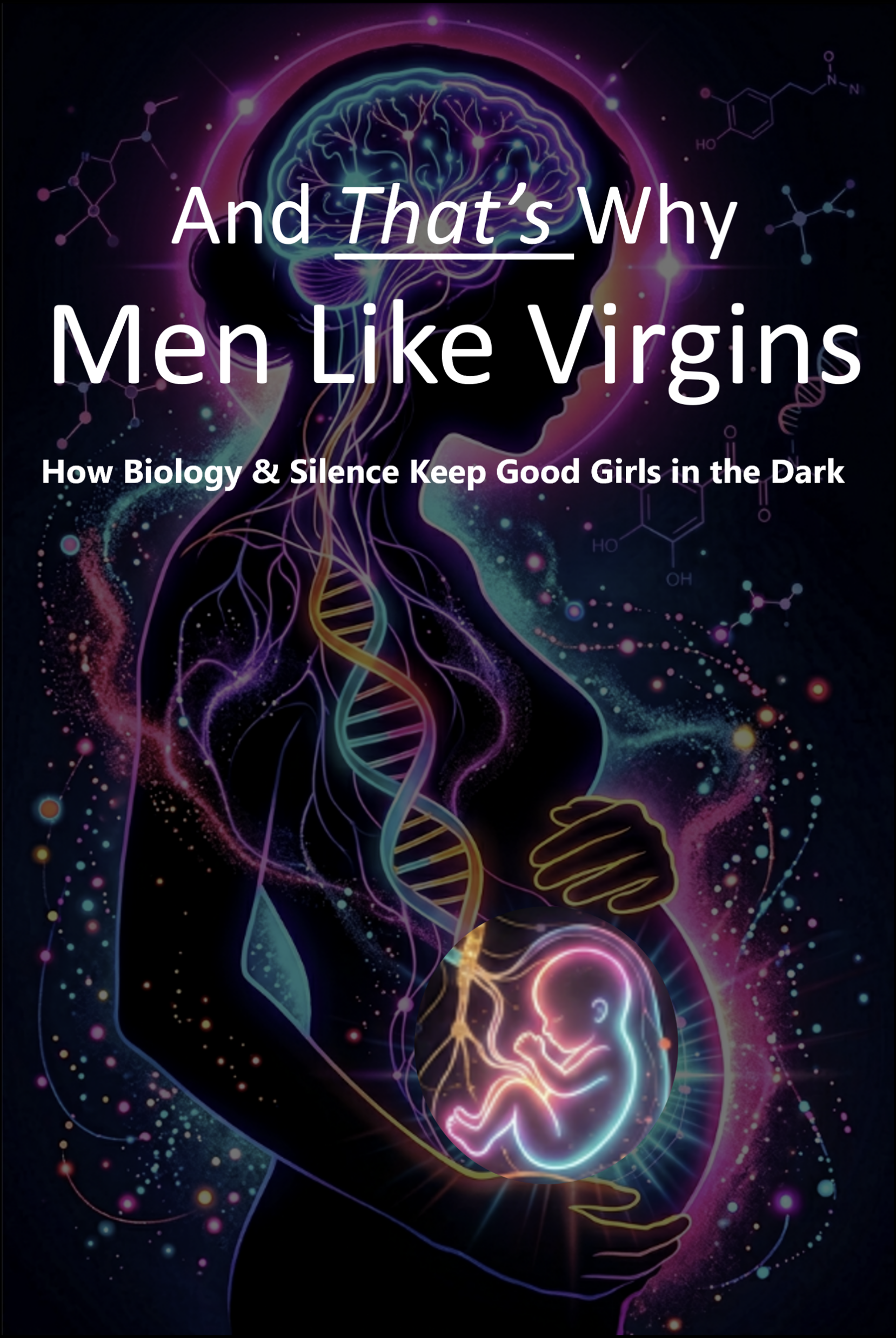
Turner, D. R. (2026). And that’s why men like virgins: How biology and silence keep good girls in the dark. VirtualVillageMom Publishing.
Walum, H., Lichtenstein, P., Neiderhiser, J. M., Reiss, D., Ganiban, J. M., Spotts, E. L., Pedersen, N. L., Anckarsater, H., Larsson, H., & Westberg, L. (2012). Variation in the oxytocin receptor gene is associated with pair-bonding and social behavior. Biological Psychiatry, 71(5), 419-426. https://doi.org/10.1016/j.biopsych.2011.09.002
Walum, H., Westberg, L., Henningsson, S., Neiderhiser, J. M., Reiss, D., Igl, W., Ganiban, J. M., Spotts, E. L., Pedersen, N. L., Eriksson, E., & Lichtenstein, P. (2008). Genetic variation in the vasopressin receptor 1a gene (AVPR1A) associates with pair-bonding behavior in humans. Proceedings of the National Academy of Sciences, 105(37), 14153-14156. https://doi.org/10.1073/pnas.0803081105
Wang, F., Gao, Y., Han, Z., Yu, Y., Long, Z., Jiang, X., Wu, Y., & Pei, B. (2023). A systematic review and meta-analysis of 90 cohort studies of social isolation, loneliness and mortality. Nature Human Behaviour, 7(8), 1307-1319. https://doi.org/10.1038/s41562-023-01617-6
Wesselmann, D., & Potter, A. E. (2009). Change in adult attachment status following treatment with EMDR: Three case studies. Journal of EMDR Practice and Research, 3(3), 178-191. https://doi.org/10.1891/1933-3196.3.3.178
Winslow, J. T., Hastings, N., Carter, C. S., Harbaugh, C. R., & Insel, T. R. (1993). A role for central vasopressin in pair bonding in monogamous prairie voles. Nature, 365(6446), 545-548. https://doi.org/10.1038/365545a0
Xu, L., Becker, B., Luo, R., Zheng, X., Zhao, W., Zhang, Q., & Kendrick, K. M. (2020). Oxytocin amplifies sex differences in human mate choice. Psychoneuroendocrinology, 112, 104483. https://doi.org/10.1016/j.psyneuen.2019.104483
Young, L. J., & Wang, Z. (2004). The neurobiology of pair bonding. Nature Neuroscience, 7(10), 1048-1054. https://doi.org/10.1038/nn1327
About the Author
Donna R. Turner, Ed.S., MPH, CHES, HSMI, CDVA is the founder of the Center for Bio-Relational Health (CBRH) and the developer of the Bio-Relational Science educational framework. Her work integrates educational psychology, public health, neuroscience, reproductive biology, and relationship science to improve health literacy and relationship decision-making.
A Certified Health Education Specialist (CHES), Turner has spent more than two decades developing educational programs that translate complex scientific research into practical knowledge for the public. Her research interests include pair bonding, neuroendocrinology, reproductive health, human papillomavirus (HPV), stress physiology, and evidence-based relationship education.
She is the author of And That’s Why Men Like Virgins: How Biology & Silence Keep Good Girls in the Dark, the inventor of a patent-pending over-the-counter HPV sperm testing technology, and the creator of the Truth Talk relationship education series.
Learn more about the Center for Bio-Relational Health, explore additional Featured Articles, browse the Relationship Question Library for practical, evidence-informed answers grounded in Bio-Relational Science, or explore the app for free relationship lessons and unlock Ask Donna René for personalize guidance to your relationship questions.
Continue Exploring Bio-Relational Science
Want the broader relationship framework?
Explore attraction, attachment, intimacy, heartbreak, male romantic behavior, stress, trauma, and relationship decision-making in one practical book written for adult women.
Explore the Book