How Do I Become a Better Partner
and Improve My Relationship?
A Bio-Relational Framework for Bonding, Reciprocity, and Relational Fit
Estimated reading time: 24 minutes | May 5, 2026
Evidence Note: This article integrates peer reviewed findings from developmental neuroscience, neuroendocrinology, reproductive immunology, virology, stress physiology, and public health. Every claim is tied to a cited primary source, and every source is listed in full with its digital object identifier at the end of the article. The Bio-Relational Science framework presented here is an original educational synthesis that translates this body of research into language the general reader can act on.
Abstract
Advice about becoming a better partner almost always assumes that effort is the limiting variable. The research does not support that assumption. Across forty-three longitudinal couples studies analyzed with machine learning, the strongest predictors of relationship quality were perceptions of the relationship itself, including perceived partner commitment, appreciation, and sexual satisfaction, rather than individual traits or skill inventories (Joel et al., 2020). Lavner et al. (2016) found that satisfaction predicted later communication more reliably than communication predicted later satisfaction, which reverses the standard causal story. This article argues, within the Bio-Relational Science framework, that relationship improvement is bounded by whether a genuine pair bond exists, and that the presence of that bond can be assessed rather than assumed. Male pair bonding is visible in endocrine data, with partnered and married men showing lower testosterone than single men across cross-sectional, longitudinal, and meta-analytic work (Burnham et al., 2003; Gray et al., 2004; van Anders & Watson, 2006; Grebe et al., 2019). Oxytocin and vasopressin support selective attachment, trust, and relationship maintenance, and oxytocin tracks interactive reciprocity during early bonding (Carter, 2017; Schneiderman et al., 2012; Holt-Lunstad et al., 2015). A working bond performs measurable physiological work: partner contact reduces neural threat response, embraces reduce cortisol release after acute stress in women, intranasal oxytocin reduces cortisol during couple conflict, and marital behavior predicts oxytocin levels and wound healing rates (Coan et al., 2006; Berretz et al., 2022; Ditzen et al., 2009; Gouin et al., 2010; Kiecolt-Glaser et al., 2005). Within a bonded relationship, specific behaviors produce measurable gains: perceived partner responsiveness predicts diurnal cortisol profiles ten years later and all-cause mortality across twenty years, gratitude promotes relationship maintenance, and approach-motivated sacrifice benefits both partners while avoidance-motivated sacrifice does not (Slatcher et al., 2015; Stanton et al., 2019; Algoe et al., 2010; Gordon et al., 2012; Impett et al., 2013). The article concludes that the first task is diagnosis rather than self-optimization, that effort cannot manufacture a bond that never formed, and that a woman’s improvement should never require her erasure (Turner, 2026).
Keywords: relationship improvement, pair bonding, perceived partner responsiveness, attachment, oxytocin, cortisol, testosterone, reciprocity, relational fit, women’s wellness, bio-relational science
Introduction
“How do I become a better partner and improve my relationship?”
The question carries a hidden premise, which is that the relationship’s quality is a function of how well the asker performs. That premise is comforting because it places the outcome under her control. It is also frequently wrong, and the cost of being wrong about it is years.
Effort does matter. Skill matters. But effort and skill operate on a structure, and structures differ in what they can support. A relationship organized around mutual attachment responds to good behavior by deepening. A relationship organized around convenience responds to good behavior by becoming more convenient.
Bio-Relational Science draws this distinction sharply. Surface improvement means becoming kinder, more patient, more available, more accommodating. Bond-level improvement means that two people are actually organized around each other, with mutual attachment, reciprocal investment, and exclusivity. Surface improvement is achievable by one person acting alone. Bond-level improvement is not.
This matters unevenly by sex, and the unevenness is the reason the question gets asked so often by women. Women are frequently taught that self-improvement is the lever that transforms a relationship. A woman who has absorbed that teaching will interpret every disappointment as evidence that she has not yet done enough, and the teaching gives her no exit condition. There is always more patience available.
The research offers a better starting point. Joel et al. (2020) found that the most robust predictors of relationship quality across forty-three longitudinal studies were relationship-specific perceptions rather than partner traits, with perceived partner commitment and appreciation near the top. Those are variables about the bond, not about one person’s technique.
So the honest sequence is diagnosis first, then improvement. This article sets out what the research says about how to tell whether a bond is present, what improvement reliably accomplishes when it is, and what it cannot accomplish when it is not (Turner, 2026).
Conceptual Framework
Four constructs organize the analysis.
Pair bonding is the formation of a selective, enduring attachment, supported by the oxytocin, vasopressin, and dopamine system established experimentally in monogamous rodents and confirmed in human genetics and pharmacology (Young & Wang, 2004; Carter, 2017; Walum et al., 2008; Walum et al., 2012). In men it is accompanied by a measurable endocrine shift away from mating effort (Burnham et al., 2003; Grebe et al., 2019).
Perceived partner responsiveness is the belief that a partner understands, validates, and cares for one’s core self. It is the best-validated single target in relationship science, predicting well-being, sleep quality, diurnal cortisol profiles a decade later, and all-cause mortality across twenty years (Selcuk et al., 2015; Selcuk et al., 2016; Slatcher et al., 2015; Stanton et al., 2019).
Stress buffering is the physiological work a bond performs. Partner contact dampens neural threat response, partner embraces reduce cortisol release after acute stress in women, positive couple interaction lowers daily cortisol, and marital behavior predicts oxytocin levels and the speed of wound healing (Coan et al., 2006; Berretz et al., 2022; Ditzen et al., 2008; Gouin et al., 2010).
Relational fit is the structural compatibility that determines whether effort compounds or dissipates. Where fit exists, improvement behaviors are reciprocated and accumulate. Where it does not, they are absorbed without return.
The argument is that the first construct determines whether the other three are available, that the second is the highest-yield behavioral target once they are, that the third is how a woman can measure the bond in her own body, and that the fourth is the variable most improvement advice ignores entirely.
Discussion
Effort is not the limiting variable
The standard model holds that better communication produces a better relationship. The longitudinal evidence largely runs the other way.
Lavner et al. (2016) followed newlywed couples and tested both directions. Marital satisfaction predicted later communication behavior more consistently than communication behavior predicted later satisfaction. Communication is at least partly an output of the relationship’s health rather than its input.
Joel et al. (2020) reinforced this at scale. Applying machine learning across forty-three longitudinal couples studies, they found that relationship-specific perceptions such as perceived partner commitment, appreciation, satisfaction, and sexual satisfaction were the strongest predictors of relationship quality, while individual difference variables contributed far less. What the relationship is doing matters more than what either person knows how to do.
Hawkins et al. (2008) meta-analyzed marriage and relationship education programs and found modest average effects on communication skill and relationship quality. The programs work somewhat. They do not work the way the advice industry implies, and they do not convert an unbonded arrangement into a bonded one.
McNulty and Fincham (2012) made the broader point in American Psychologist: psychological processes commonly assumed to be universally beneficial, including forgiveness, optimism, and positive thinking, have effects that depend on context. In a relationship where a partner behaves badly, forgiveness predicted continued bad behavior rather than improvement. A behavior is not good in itself. It is good in a structure that reciprocates it.
So the first correction is this. Effort is necessary and it is not sufficient, and applying more of it to a structure that cannot use it is not perseverance. It is a misdiagnosis.
Diagnose the bond before trying to improve it
Before optimizing, establish what you are optimizing. This is the step almost all popular advice skips.
Le and Agnew (2003) confirmed across a meta-analysis of the investment model that commitment is predicted by satisfaction, investment size, and quality of alternatives. Commitment is therefore not a mystery. It has inputs that can be observed. A partner who preserves alternatives is maintaining the variable that suppresses commitment.
Joel et al. (2018) add a caution about reading presence as commitment. They found that people stay in relationships partly for the partner’s sake, which means continued participation is weak evidence of attachment. Machia and Ogolsky (2021) found that stay and leave reasons coexist persistently, and that people frequently remain in relationships they are actively reconsidering. Someone can be present, pleasant, and internally decided against the thing you are working toward.
Karney and Bradbury (1995) reviewed the longitudinal literature on marital quality and stability and concluded that enduring vulnerabilities, stressful events, and adaptive processes jointly determine trajectories. Trajectory is detectable early. A relationship’s direction is usually visible well before its endpoint.
The practical diagnostic is behavioral rather than verbal. Does investment flow both directions. Are alternatives closed. Is support reciprocated without being requested. Does his behavior change when your needs conflict with his convenience. Those questions produce data. “Does he love me” does not.
In men, bonding is visible in endocrine data
The claim that male bonding involves a real biological shift is sometimes treated as sentimental. It is a documented finding, and it gives a woman an external reference point.
Burnham et al. (2003) found that men in committed romantic relationships had lower testosterone than single men. Gray et al. (2004) replicated and extended this in a study of human male pair bonding and testosterone. Van Anders and Watson (2006) found the relationship status effect in both cross-sectional and longitudinal data. Gettler et al. (2011) provided longitudinal evidence in the Proceedings of the National Academy of Sciences that fatherhood decreases testosterone. Grebe et al. (2019) confirmed the pattern meta-analytically across pair bonding and fatherhood.
The interpretation is that testosterone indexes mating effort. A man who has genuinely reallocated from pursuit to investment shows the shift. A man who has not, does not.
Behavioral evidence points the same way. Scheele et al. (2012) found that intranasal oxytocin increased the social distance pair-bonded men kept from an attractive woman, with no such effect in single men. Scheele et al. (2013) found that oxytocin enhanced reward system responses in men viewing their own partner’s face rather than an unfamiliar woman. In a bonded man, the bonding system actively works to protect the bond.
This is the Bio-Relational point that changes the question. A woman does not have to guess whether he has bonded, and she does not have to accept his self-report as the only available evidence. Bonding produces behavior, and behavior is observable. His own physiology is reporting, and so is his conduct under temptation and inconvenience.
Her original framing was right. If that shift never occurred, the relationship may run on comfort, routine, sex, and shared logistics while lacking the organization that makes trust and exclusivity feel natural. Working harder inside that structure improves his comfort. It does not build the bond.
Responsiveness is the highest-yield behavior in a bonded relationship
When the bond is real, there is one target that outperforms everything else, and it is specific enough to practice.
Perceived partner responsiveness is the belief that one’s partner understands, validates, and cares for the self one actually is. Selcuk et al. (2015) found in a ten-year longitudinal study that partner responsiveness predicted both hedonic and eudaimonic well-being. Selcuk et al. (2016) found it predicted better sleep quality through lower anxiety. Slatcher et al. (2015) found it predicted healthier diurnal cortisol profiles ten years later. Stanton et al. (2019) found it predicted all-cause mortality across a twenty-year follow-up, with daily negative affect reactivity as a mediating pathway.
Very few behavioral variables in any field of psychology predict mortality. This one does.
Responsiveness also has a positive-event form that most people neglect. Gable et al. (2004) examined what happens when a partner shares good news and found that active constructive responding, meaning enthusiastic engagement with the partner’s good fortune, predicted relationship well-being. Maisel and Gable (2009) showed that perceived responsiveness was the active ingredient in social support, meaning support that is not perceived as responsive does not deliver its benefit. Helping in a way the partner does not experience as attuned is effort without yield.
So “how do I become a better partner” has a precise answer in a bonded relationship. Become measurably responsive. Understand, validate, care, and show up for good news as reliably as for bad. This is not vague warmth. It is the most consequential variable relationship science has isolated.
Stress buffering is the body’s report on the bond
A woman does not need to rely on interpretation to assess whether a relationship is functioning. Her physiology is already producing a reading.
Coan et al. (2006) placed women in an fMRI scanner under threat of shock and found that holding a partner’s hand attenuated neural threat response, with the effect strongest in higher-quality marriages. The quality of the bond determined how much regulation the contact provided.
Berretz et al. (2022) found that romantic partner embraces reduced cortisol release after acute stress induction in women but not in men. The sex difference is the finding, and it fits the Bio-Relational account of differentiated bonding rather than contradicting it. Ditzen et al. (2008) found that positive couple interactions predicted lower daily cortisol, describing intimacy as stress-protective. Ditzen et al. (2009) found that intranasal oxytocin increased positive communication and reduced cortisol during couple conflict. Heinrichs et al. (2003) found that social support combined with oxytocin produced the lowest cortisol and subjective stress responses. Grewen et al. (2005) found that warm partner contact affected resting oxytocin, cortisol, norepinephrine, and blood pressure. Holt-Lunstad et al. (2008) found a warm touch intervention among married couples raised oxytocin and lowered blood pressure and cortisol.
The immune consequences are documented too. Kiecolt-Glaser et al. (2005) found that hostile marital interactions predicted higher proinflammatory cytokine production and slower wound healing. Gouin et al. (2010) found that marital behavior predicted oxytocin and vasopressin levels and the rate of wound healing. Robles et al. (2014) meta-analyzed marital quality and health and found reliable associations across cardiovascular, immune, and mortality outcomes.
Attachment history conditions how strongly this operates. Pietromonaco et al. (2013) reviewed adult romantic attachment and cortisol responses to stress and found that attachment orientation shapes physiological reactivity within relationships. Simpson and Rholes (2017) reached the same conclusion across the adult attachment and stress literature: attachment organization determines whether a partner functions as a source of regulation or a source of threat.
Read together, these results mean the body keeps score. A bond that works lowers cortisol, raises oxytocin, steadies the cardiovascular system, and heals wounds faster. A relationship that consistently does the opposite is supplying information about the structure, and that information is more reliable than either partner’s account of it.
Conflict conduct forecasts dissolution, and it is measurable
Improvement talk usually targets conflict, and conflict is in fact where the strongest predictive data live. But the useful finding is not that couples should fight less.
Gottman and Levenson (1992) identified marital processes predictive of later dissolution across behavior, physiology, and health. Gottman and Levenson (2000) then predicted the timing of divorce across a fourteen-year period, finding that different processes predicted early versus late divorce, with negative affect during conflict predicting early dissolution and the absence of positive affect predicting later dissolution. The absence of warmth is as diagnostic as the presence of hostility.
Overall and McNulty (2017) reviewed what type of communication during conflict actually benefits intimate relationships and reached a conclusion that contradicts most advice. Direct and even negative communication can be beneficial when it successfully motivates change, while avoidance of conflict often preserves the problem. Overall et al. (2009) had found the same pattern earlier: direct strategies produced short-term discomfort and greater long-term change, while indirect strategies felt easier and accomplished less.
Rusbult et al. (1991) documented accommodation processes, showing that the willingness to respond constructively rather than destructively to a partner’s bad behavior is predicted by commitment. Accommodation is downstream of commitment. A partner who is not committed does not accommodate, and no amount of modeling it for him produces it in him.
The practical instruction is uncomfortable. Stop optimizing for a pleasant conversation and start optimizing for an accurate one. Indirect, accommodating, hint-based communication is the approach most women are taught and the least effective one available.
Gratitude and appreciation do structural work
Among the behaviors that genuinely strengthen a bonded relationship, gratitude has unusually strong support, and it is the one most likely to be dismissed as soft.
Algoe et al. (2010) found that everyday gratitude functioned as a booster shot for romantic relationships, with a partner’s expression of gratitude predicting improvements in relationship connection and satisfaction the following day. Gordon et al. (2012) demonstrated across multiple studies that gratitude promotes relationship maintenance, with appreciation predicting greater responsiveness and commitment over time, in both self-report and observational data.
Joel et al. (2020) locate the same variable at the top of their predictor list. Perceived partner appreciation was among the strongest predictors of relationship quality across forty-three longitudinal studies. Being appreciated is not a nice extra. It is one of the measured load-bearing features of a functioning bond.
The asymmetry to watch is who is doing the appreciating. In a bonded relationship, gratitude runs both directions and compounds. In a managed arrangement, one person expresses appreciation continually and receives acknowledgment rather than reciprocity. The direction of flow is itself a diagnostic.
Sacrifice helps only when its motive is approach
Self-sacrifice is the behavior most often prescribed to women and the one with the most conditional evidence behind it.
Impett et al. (2013) examined how sacrifice affects both giver and recipient through approach-avoidance motivational theory. Sacrifices made for approach motives, meaning to promote a partner’s well-being or the relationship’s growth, predicted higher personal and relational well-being for both parties. Sacrifices made for avoidance motives, meaning to prevent conflict, avoid disapproval, or forestall loss, predicted worse outcomes for both.
Righetti and Impett (2017) reviewed sacrifice in close relationships and confirmed that motives and emotions determine outcomes rather than the act of sacrificing. Visserman et al. (2018) found that a recipient’s perception of the sacrifice motive shaped gratitude, meaning the partner can often tell which kind it was.
This is the evidence base for the section her original article got right. A woman who gives in order to prevent abandonment is engaged in avoidance-motivated sacrifice, and the research predicts it will degrade her well-being and the relationship simultaneously. Effort driven by fear does not read as generosity. It reads as anxiety, and it is answered accordingly.
Impett and Peplau (2003) document the sharpest form of this. Sexual compliance, meaning consenting to unwanted sexual activity for relationship reasons, was reported more often by women and linked to relationship motives and insecure attachment. Giving from fear has a floor, and this is where it lands.
Sexual responsiveness is maintenance, not a favor
Sexual behavior belongs in any honest account of relationship improvement, and the research is more specific than the usual advice.
Muise et al. (2012) found that being motivated to meet a partner’s sexual needs, what they termed sexual communal strength, sustained sexual desire over time in both members of a couple. Motivation to meet the partner’s needs predicted the maintenance of one’s own desire, not its depletion. Muise et al. (2013) then separated the mechanism by motive, finding that sex engaged in for approach reasons predicted higher desire and satisfaction while sex engaged in to avoid a negative outcome predicted lower desire and satisfaction.
Birnbaum et al. (2006) found that sexual experience is not psychologically separable from relationship quality, and that attachment orientation shapes how sexual experience is interpreted and what it does to the bond. Joel et al. (2020) placed sexual satisfaction among the strongest predictors of overall relationship quality across forty-three studies.
The distinction matters practically. Sex within a bonded relationship, entered for approach reasons, is relationship maintenance with measurable returns for both people. Sex offered to secure attention or forestall withdrawal is avoidance-motivated and produces the opposite. The behavior looks the same from outside. The outcome does not.
Improvement should never require erasure
This is the boundary the research supports drawing, and it deserves to be stated without softening.
A woman can become a kinder, clearer, more emotionally steady partner. She cannot become the reason a man bonds. Pair bonding involves a neuroendocrine shift in the bonding partner, and it is not installed from outside by a sufficiently good woman (Young & Wang, 2004; Grebe et al., 2019; Carter, 2017).
Spielmann et al. (2013) identify the force that pushes against this recognition. Across six studies, fear of being single predicted settling for less responsive and less compatible partners, in experimental and longitudinal designs. Fear of being single does not merely lower standards at the outset. It reinterprets evidence already in hand, and it will present staying as maturity.
McNulty and Fincham (2012) supply the other half. Forgiveness, patience, and positive reappraisal are not universally beneficial. In relationships where a partner behaves badly, those processes predicted the continuation of bad behavior. The virtues a woman was taught to bring can function as maintenance for the thing harming her.
Neff and Karney (2007) found stress crossover between spouses, with one partner’s stress predicting the other’s over time. A woman absorbing chronic relational stress is not containing it. She is metabolizing it, with the physiological consequences the marital health literature documents (Robles et al., 2014; Kiecolt-Glaser et al., 2005).
So improvement has a limit condition. If becoming a better partner requires becoming less of a person, the project has stopped being improvement.
Growth versus salvage
Her original article named this distinction, and the research supports it precisely.
Growth is what happens when two bonded people direct effort at a structure that reciprocates. Responsiveness raises well-being for both. Gratitude compounds. Approach-motivated sacrifice benefits giver and recipient. Direct communication produces change (Slatcher et al., 2015; Gordon et al., 2012; Impett et al., 2013; Overall & McNulty, 2017).
Salvage is what happens when one person applies those same behaviors to a structure that absorbs them. The behaviors are identical. The return is not, because the return depends on reciprocity and reciprocity depends on the bond.
Salvage is hard to detect from inside because it feels virtuous. Patience, loyalty, and generosity are real virtues, and they are the exact materials salvage is built from. The signal is direction of flow. In growth, support moves both ways without being requested. In salvage, one person manages the other’s emotional state as a condition of peace.
Johnson et al. (2013) provide a useful benchmark for what actual repair looks like. Using emotionally focused therapy with distressed couples, they found that successful treatment changed the neural threat response to partner hand-holding, meaning the partner’s touch became regulating where it had not been before. Repair is possible, it is measurable, and in that study it required both partners in structured treatment rather than one partner trying harder.
Hawkins et al. (2008) found relationship education produces modest average gains. Modest and real. That is the honest size of what technique accomplishes, and it is not the size of the gap between a managed arrangement and a bond.
How to decide what to do
The question that opened this article deserves a direct answer in three steps.
First, diagnose. Look for the behavioral signature of bonding rather than for declarations: alternatives closed, investment flowing both directions, protective behavior under temptation, support offered without request (Le & Agnew, 2003; Scheele et al., 2012; Joel et al., 2018). Then check your own physiology. A bond that works lowers your stress rather than generating it (Coan et al., 2006; Berretz et al., 2022; Ditzen et al., 2008).
Second, if the bond is present, work on responsiveness first and everything else second. It is the variable with the longest reach, predicting cortisol a decade out and mortality two decades out (Slatcher et al., 2015; Stanton et al., 2019). Add gratitude expressed out loud, approach-motivated giving, direct rather than indirect conflict communication, and active constructive responding to good news (Algoe et al., 2010; Impett et al., 2013; Overall & McNulty, 2017; Gable et al., 2004).
Third, if the bond is absent, stop optimizing. Additional effort will improve his experience and will not change the structure. The appropriate work is evaluation and decision, and it gets harder the longer it waits, because investment and fear both grow with time (Le & Agnew, 2003; Spielmann et al., 2013).
Relation to Bio-Relational Science
Bio-Relational Science holds that relational outcomes are produced by biology, attachment history, and behavior acting together, and that the biological layer sets the limits within which behavior operates. This question is the clearest application of that principle.
The framework separates two claims that popular advice collapses. The first is that behavior matters, which is true and well supported. Responsiveness, gratitude, approach-motivated giving, and direct communication produce measurable gains (Slatcher et al., 2015; Gordon et al., 2012; Impett et al., 2013; Overall & McNulty, 2017). The second is that behavior is sufficient, which is false. Those gains are realized through reciprocity, and reciprocity requires a bond that has actually formed in both people.
Pair bonding is a biological event with observable markers, including the endocrine shift in men and the protective behavior that follows it (Burnham et al., 2003; Grebe et al., 2019; Scheele et al., 2012). It is not produced by one partner’s excellence. This is why the framework insists on diagnosis before prescription, and why it treats a woman’s physiological state as legitimate evidence rather than as oversensitivity (Coan et al., 2006; Berretz et al., 2022; Robles et al., 2014).
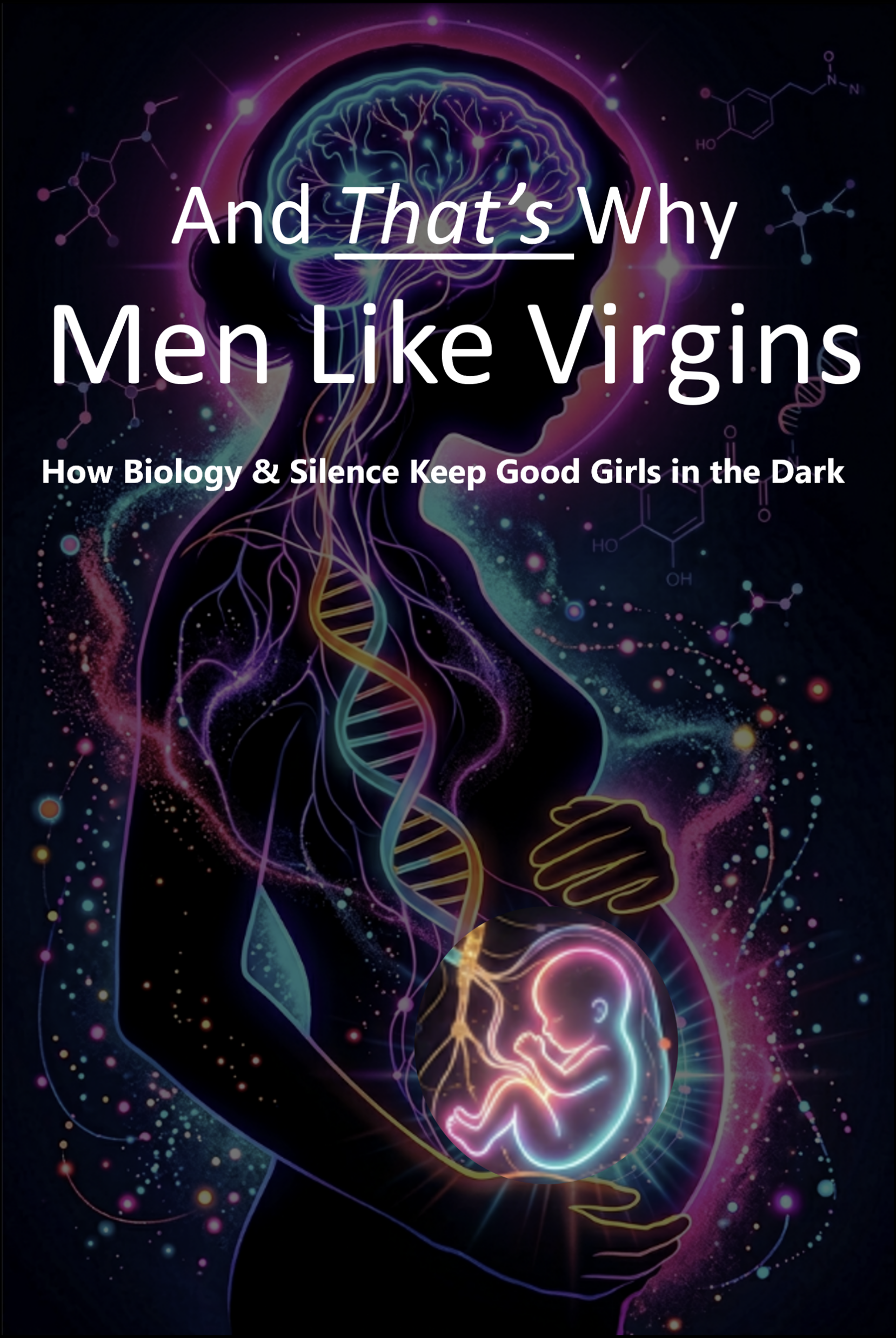
Turner (2026) develops this argument in And That’s Why Men Like Virgins, tracing how silence about the biology of bonding leaves women applying effort to structures that cannot use it, and mistaking the failure of the structure for a failure of their own devotion. The present analysis extends that work with the responsiveness, stress-buffering, sacrifice-motive, and marital health literatures.
Implications for Women’s Wellness and Bio-Relational Education
Relationship education should lead with diagnosis rather than with technique. A woman who cannot tell whether she is in a bonded relationship or a managed arrangement has no way to know whether her effort is investment or attrition.
Five teaching priorities follow.
Teach diagnosis before self-optimization. The first question is not what should I do differently. It is what is actually here. Observable markers exist, including whether alternatives are closed, whether investment flows both ways, and whether support arrives without being requested (Le & Agnew, 2003; Joel et al., 2018).
Teach responsiveness as the primary skill. It is specific, teachable, and has the deepest evidence base of any behavioral target in the field, predicting cortisol profiles and mortality years later (Selcuk et al., 2015; Slatcher et al., 2015; Stanton et al., 2019).
Teach the motive test for giving. Approach-motivated sacrifice benefits both partners. Avoidance-motivated sacrifice harms both. The relevant question is not how much a woman gives but why she is giving it (Impett et al., 2013; Righetti & Impett, 2017).
Teach that the body’s reading is data. Cortisol, sleep, and stress reactivity respond to relationship quality, and a woman whose physiology is deteriorating inside a relationship is receiving accurate information (Berretz et al., 2022; Ditzen et al., 2008; Robles et al., 2014).
Teach that virtues are context dependent. Forgiveness, patience, and positive reappraisal are beneficial in reciprocating relationships and maintain bad behavior in non-reciprocating ones (McNulty & Fincham, 2012). A woman who has been taught these as unconditional goods has been given a trap.
For educators and clinicians, the practical shift is to stop offering “be a better partner” as context-free advice. In a bonded relationship it is useful and specific. In an unbonded one it is a delay mechanism.
Conclusion
Becoming a better partner is a real project with a real evidence base, and it is bounded by a prior question.
If the bond exists, improvement works and it works through identifiable channels. Responsiveness predicts health and longevity. Gratitude sustains connection. Approach-motivated giving benefits both people. Direct communication produces change where hinting does not. These are measured effects, not aspirations (Slatcher et al., 2015; Stanton et al., 2019; Gordon et al., 2012; Impett et al., 2013; Overall & McNulty, 2017).
If the bond does not exist, effort maintains an arrangement. It does not build attachment, because attachment involves a biological shift in the other person that no amount of devotion installs from outside (Grebe et al., 2019; Carter, 2017; Young & Wang, 2004).
The most useful reversal the research offers is causal. Satisfaction predicts later communication more reliably than communication predicts later satisfaction (Lavner et al., 2016). Skill is partly a symptom of health rather than its source. Which means the honest first move is not to work harder. It is to tell the truth about what is there.
Then decide. Improve what can be improved, and stop paying maintenance on what cannot. The goal is not to work harder at love. It is to invest where investment returns.
References
Algoe, S. B., Gable, S. L., & Maisel, N. C. (2010). It’s the little things: Everyday gratitude as a booster shot for romantic relationships. Personal Relationships, 17(2), 217-233. https://doi.org/10.1111/j.1475-6811.2010.01273.x
Berretz, G., Cebula, C., Wortelmann, B. M., Papadopoulou, P., Wolf, O. T., Ocklenburg, S., & Packheiser, J. (2022). Romantic partner embraces reduce cortisol release after acute stress induction in women but not in men. PLOS ONE, 17(5), e0266887. https://doi.org/10.1371/journal.pone.0266887
Birnbaum, G. E., Reis, H. T., Mikulincer, M., Gillath, O., & Orpaz, A. (2006). When sex is more than just sex: Attachment orientations, sexual experience, and relationship quality. Journal of Personality and Social Psychology, 91(5), 929-943. https://doi.org/10.1037/0022-3514.91.5.929
Burnham, T. C., Chapman, J. F., Gray, P. B., McIntyre, M. H., Lipson, S. F., & Ellison, P. T. (2003). Men in committed, romantic relationships have lower testosterone. Hormones and Behavior, 44(2), 119-122. https://doi.org/10.1016/S0018-506X(03)00125-9
Carter, C. S. (2017). The oxytocin-vasopressin pathway in the context of love and fear. Frontiers in Endocrinology, 8, 356. https://doi.org/10.3389/fendo.2017.00356
Coan, J. A., Schaefer, H. S., & Davidson, R. J. (2006). Lending a hand: Social regulation of the neural response to threat. Psychological Science, 17(12), 1032-1039. https://doi.org/10.1111/j.1467-9280.2006.01832.x
Ditzen, B., Hoppmann, C., & Klumb, P. (2008). Positive couple interactions and daily cortisol: On the stress-protecting role of intimacy. Psychosomatic Medicine, 70(8), 883-889. https://doi.org/10.1097/PSY.0b013e318185c4fc
Ditzen, B., Schaer, M., Gabriel, B., Bodenmann, G., Ehlert, U., & Heinrichs, M. (2009). Intranasal oxytocin increases positive communication and reduces cortisol levels during couple conflict. Biological Psychiatry, 65(9), 728-731. https://doi.org/10.1016/j.biopsych.2008.10.011
Gable, S. L., Reis, H. T., Impett, E. A., & Asher, E. R. (2004). What do you do when things go right? The intrapersonal and interpersonal benefits of sharing positive events. Journal of Personality and Social Psychology, 87(2), 228-245. https://doi.org/10.1037/0022-3514.87.2.228
Gettler, L. T., McDade, T. W., Feranil, A. B., & Kuzawa, C. W. (2011). Longitudinal evidence that fatherhood decreases testosterone in human males. Proceedings of the National Academy of Sciences, 108(39), 16194-16199. https://doi.org/10.1073/pnas.1105403108
Gordon, A. M., Impett, E. A., Kogan, A., Oveis, C., & Keltner, D. (2012). To have and to hold: Gratitude promotes relationship maintenance in intimate bonds. Journal of Personality and Social Psychology, 103(2), 257-274. https://doi.org/10.1037/a0028723
Gottman, J. M., & Levenson, R. W. (1992). Marital processes predictive of later dissolution: Behavior, physiology, and health. Journal of Personality and Social Psychology, 63(2), 221-233. https://doi.org/10.1037/0022-3514.63.2.221
Gottman, J. M., & Levenson, R. W. (2000). The timing of divorce: Predicting when a couple will divorce over a 14-year period. Journal of Marriage and Family, 62(3), 737-745. https://doi.org/10.1111/j.1741-3737.2000.00737.x
Gouin, J. P., Carter, C. S., Pournajafi-Nazarloo, H., Glaser, R., Malarkey, W. B., Loving, T. J., Stowell, J., & Kiecolt-Glaser, J. K. (2010). Marital behavior, oxytocin, vasopressin, and wound healing. Psychoneuroendocrinology, 35(7), 1082-1090. https://doi.org/10.1016/j.psyneuen.2010.01.009
Gray, P. B., Chapman, J. F., Burnham, T. C., McIntyre, M. H., Lipson, S. F., & Ellison, P. T. (2004). Human male pair bonding and testosterone. Human Nature, 15(2), 119-131. https://doi.org/10.1007/s12110-004-1016-6
Grebe, N. M., Sarafin, R. E., Strenth, C. R., & Zilioli, S. (2019). Pair-bonding, fatherhood, and the role of testosterone: A meta-analytic review. Neuroscience and Biobehavioral Reviews, 98, 221-233. https://doi.org/10.1016/j.neubiorev.2019.01.010
Grewen, K. M., Girdler, S. S., Amico, J., & Light, K. C. (2005). Effects of partner support on resting oxytocin, cortisol, norepinephrine, and blood pressure before and after warm partner contact. Psychosomatic Medicine, 67(4), 531-538. https://doi.org/10.1097/01.psy.0000170341.88395.47
Hawkins, A. J., Blanchard, V. L., Baldwin, S. A., & Fawcett, E. B. (2008). Does marriage and relationship education work? A meta-analytic study. Journal of Consulting and Clinical Psychology, 76(5), 723-734. https://doi.org/10.1037/a0012584
Heinrichs, M., Baumgartner, T., Kirschbaum, C., & Ehlert, U. (2003). Social support and oxytocin interact to suppress cortisol and subjective responses to psychosocial stress. Biological Psychiatry, 54(12), 1389-1398. https://doi.org/10.1016/S0006-3223(03)00465-7
Holt-Lunstad, J., Birmingham, W. A., & Light, K. C. (2008). Influence of a “warm touch” support enhancement intervention among married couples on ambulatory blood pressure, oxytocin, alpha amylase, and cortisol. Psychosomatic Medicine, 70(9), 976-985. https://doi.org/10.1097/PSY.0b013e318187aef7
Holt-Lunstad, J., Birmingham, W. C., & Light, K. C. (2015). Relationship quality and oxytocin: Influence of stable and modifiable aspects of relationships. Journal of Social and Personal Relationships, 32(4), 472-490. https://doi.org/10.1177/0265407514536294
Impett, E. A., & Peplau, L. A. (2003). Sexual compliance: Gender, motivational, and relationship perspectives. Journal of Sex Research, 40(1), 87-100. https://doi.org/10.1080/00224490309552169
Impett, E. A., Gere, J., Kogan, A., Gordon, A. M., & Keltner, D. (2013). How sacrifice impacts the giver and the recipient: Insights from approach-avoidance motivational theory. Journal of Personality, 82(5), 390-401. https://doi.org/10.1111/jopy.12070
Joel, S., Eastwick, P. W., Allison, C. J., Arriaga, X. B., Baker, Z. G., Bar-Kalifa, E., Bergeron, S., Birnbaum, G. E., Brock, R. L., Brumbaugh, C. C., Carmichael, C. L., Chen, S., Clarke, J., Cobb, R. J., Coolsen, M. K., Davis, J., de Jong, D. C., Debrot, A., DeHaas, E. C., … Wolf, S. (2020). Machine learning uncovers the most robust self-report predictors of relationship quality across 43 longitudinal couples studies. Proceedings of the National Academy of Sciences, 117(32), 19061-19071. https://doi.org/10.1073/pnas.1917036117
Joel, S., Impett, E. A., Spielmann, S. S., & MacDonald, G. (2018). How interdependent are stay/leave decisions? On staying in the relationship for the sake of the romantic partner. Journal of Personality and Social Psychology, 115(5), 805-824. https://doi.org/10.1037/pspi0000139
Johnson, S. M., Moser, M. B., Beckes, L., Smith, A., Dalgleish, T., Halchuk, R., Hasselmo, K., Greenman, P. S., Merali, Z., & Coan, J. A. (2013). Soothing the threatened brain: Leveraging contact comfort with emotionally focused therapy. PLoS ONE, 8(11), e79314. https://doi.org/10.1371/journal.pone.0079314
Karney, B. R., & Bradbury, T. N. (1995). The longitudinal course of marital quality and stability: A review of theory, method, and research. Psychological Bulletin, 118(1), 3-34. https://doi.org/10.1037/0033-2909.118.1.3
Kiecolt-Glaser, J. K., Loving, T. J., Stowell, J. R., Malarkey, W. B., Lemeshow, S., Dickinson, S. L., & Glaser, R. (2005). Hostile marital interactions, proinflammatory cytokine production, and wound healing. Archives of General Psychiatry, 62(12), 1377-1384. https://doi.org/10.1001/archpsyc.62.12.1377
Lavner, J. A., Karney, B. R., & Bradbury, T. N. (2016). Does couples’ communication predict marital satisfaction, or does marital satisfaction predict communication? Journal of Marriage and Family, 78(3), 680-694. https://doi.org/10.1111/jomf.12301
Le, B., & Agnew, C. R. (2003). Commitment and its theorized determinants: A meta-analysis of the investment model. Personal Relationships, 10(1), 37-57. https://doi.org/10.1111/1475-6811.00035
Machia, L. V., & Ogolsky, B. G. (2021). The reasons people think about staying and leaving their romantic relationships: A mixed-method analysis. Personality and Social Psychology Bulletin, 47(8), 1279-1293. https://doi.org/10.1177/0146167220966903
Maisel, N. C., & Gable, S. L. (2009). The paradox of received social support: The importance of responsiveness. Psychological Science, 20(8), 928-932. https://doi.org/10.1111/j.1467-9280.2009.02388.x
McNulty, J. K., & Fincham, F. D. (2012). Beyond positive psychology? Toward a contextual view of psychological processes and well-being. American Psychologist, 67(2), 101-110. https://doi.org/10.1037/a0024572
Muise, A., Impett, E. A., & Desmarais, S. (2013). Getting it on versus getting it over with: Sexual motivation, desire, and satisfaction in intimate bonds. Personality and Social Psychology Bulletin, 39(10), 1320-1332. https://doi.org/10.1177/0146167213490963
Muise, A., Impett, E. A., Kogan, A., & Desmarais, S. (2012). Keeping the spark alive: Being motivated to meet a partner’s sexual needs sustains sexual desire in long-term romantic relationships. Social Psychological and Personality Science, 4(3), 267-273. https://doi.org/10.1177/1948550612457185
Neff, L. A., & Karney, B. R. (2007). Stress crossover in newlywed marriage: A longitudinal and dyadic perspective. Journal of Marriage and Family, 69(3), 594-607. https://doi.org/10.1111/j.1741-3737.2007.00394.x
Overall, N. C., & McNulty, J. K. (2017). What type of communication during conflict is beneficial for intimate relationships? Current Opinion in Psychology, 13, 1-5. https://doi.org/10.1016/j.copsyc.2016.03.002
Overall, N. C., Fletcher, G. J. O., Simpson, J. A., & Sibley, C. G. (2009). Regulating partners in intimate relationships: The costs and benefits of different communication strategies. Journal of Personality and Social Psychology, 96(3), 620-639. https://doi.org/10.1037/a0012961
Pietromonaco, P. R., DeBuse, C. J., & Powers, S. I. (2013). Does attachment get under the skin? Adult romantic attachment and cortisol responses to stress. Current Directions in Psychological Science, 22(1), 63-68. https://doi.org/10.1177/0963721412463229
Righetti, F., & Impett, E. (2017). Sacrifice in close relationships: Motives, emotions, and relationship outcomes. Social and Personality Psychology Compass, 11(10), e12342. https://doi.org/10.1111/spc3.12342
Robles, T. F., Slatcher, R. B., Trombello, J. M., & McGinn, M. M. (2014). Marital quality and health: A meta-analytic review. Psychological Bulletin, 140(1), 140-187. https://doi.org/10.1037/a0031859
Rusbult, C. E., Verette, J., Whitney, G. A., Slovik, L. F., & Lipkus, I. (1991). Accommodation processes in close relationships: Theory and preliminary empirical evidence. Journal of Personality and Social Psychology, 60(1), 53-78. https://doi.org/10.1037/0022-3514.60.1.53
Scheele, D., Striepens, N., Gunturkun, O., Deutschlander, S., Maier, W., Kendrick, K. M., & Hurlemann, R. (2012). Oxytocin modulates social distance between males and females. The Journal of Neuroscience, 32(46), 16074-16079. https://doi.org/10.1523/JNEUROSCI.2755-12.2012
Scheele, D., Wille, A., Kendrick, K. M., Stoffel-Wagner, B., Becker, B., Gunturkun, O., Maier, W., & Hurlemann, R. (2013). Oxytocin enhances brain reward system responses in men viewing the face of their female partner. Proceedings of the National Academy of Sciences, 110(50), 20308-20313. https://doi.org/10.1073/pnas.1314190110
Schneiderman, I., Zagoory-Sharon, O., Leckman, J. F., & Feldman, R. (2012). Oxytocin during the initial stages of romantic attachment: Relations to couples’ interactive reciprocity. Psychoneuroendocrinology, 37(8), 1277-1285. https://doi.org/10.1016/j.psyneuen.2011.12.021
Selcuk, E., Gunaydin, G., Ong, A. D., & Almeida, D. M. (2015). Does partner responsiveness predict hedonic and eudaimonic well-being? A 10-year longitudinal study. Journal of Marriage and Family, 78(2), 311-325. https://doi.org/10.1111/jomf.12272
Selcuk, E., Stanton, S. C. E., Slatcher, R. B., & Ong, A. D. (2016). Perceived partner responsiveness predicts better sleep quality through lower anxiety. Social Psychological and Personality Science, 8(1), 83-92. https://doi.org/10.1177/1948550616662128
Simpson, J. A., & Rholes, W. S. (2017). Adult attachment, stress, and romantic relationships. Current Opinion in Psychology, 13, 19-24. https://doi.org/10.1016/j.copsyc.2016.04.006
Slatcher, R. B., Selcuk, E., & Ong, A. D. (2015). Perceived partner responsiveness predicts diurnal cortisol profiles 10 years later. Psychological Science, 26(7), 972-982. https://doi.org/10.1177/0956797615575022
Spielmann, S. S., MacDonald, G., Maxwell, J. A., Joel, S., Peragine, D., Muise, A., & Impett, E. A. (2013). Settling for less out of fear of being single. Journal of Personality and Social Psychology, 105(6), 1049-1073. https://doi.org/10.1037/a0034628
Stanton, S. C. E., Selcuk, E., Farrell, A. K., Slatcher, R. B., & Ong, A. D. (2019). Perceived partner responsiveness, daily negative affect reactivity, and all-cause mortality: A 20-year longitudinal study. Psychosomatic Medicine, 81(1), 7-15. https://doi.org/10.1097/PSY.0000000000000618
Turner, D. R. (2026). And that’s why men like virgins: How biology and silence keep good girls in the dark. VirtualVillageMom Publishing.
van Anders, S. M., & Watson, N. V. (2006). Relationship status and testosterone in North American heterosexual and non-heterosexual men and women: Cross-sectional and longitudinal data. Psychoneuroendocrinology, 31(6), 715-723. https://doi.org/10.1016/j.psyneuen.2006.01.008
Visserman, M. L., Righetti, F., Impett, E. A., Keltner, D., & Van Lange, P. A. M. (2018). It’s the motive that counts: Perceived sacrifice motives and gratitude in romantic relationships. Emotion, 18(5), 625-637. https://doi.org/10.1037/emo0000344
Walum, H., Lichtenstein, P., Neiderhiser, J. M., Reiss, D., Ganiban, J. M., Spotts, E. L., Pedersen, N. L., Anckarsater, H., Larsson, H., & Westberg, L. (2012). Variation in the oxytocin receptor gene is associated with pair-bonding and social behavior. Biological Psychiatry, 71(5), 419-426. https://doi.org/10.1016/j.biopsych.2011.09.002
Walum, H., Westberg, L., Henningsson, S., Neiderhiser, J. M., Reiss, D., Igl, W., Ganiban, J. M., Spotts, E. L., Pedersen, N. L., Eriksson, E., & Lichtenstein, P. (2008). Genetic variation in the vasopressin receptor 1a gene (AVPR1A) associates with pair-bonding behavior in humans. Proceedings of the National Academy of Sciences, 105(37), 14153-14156. https://doi.org/10.1073/pnas.0803081105
Young, L. J., & Wang, Z. (2004). The neurobiology of pair bonding. Nature Neuroscience, 7(10), 1048-1054. https://doi.org/10.1038/nn1327
About the Author
Donna R. Turner, Ed.S., MPH, CHES, HSMI, CDVA is the founder of the Center for Bio-Relational Health (CBRH) and the developer of the Bio-Relational Science educational framework. Her work integrates educational psychology, public health, neuroscience, reproductive biology, and relationship science to improve health literacy and relationship decision-making.
A Certified Health Education Specialist (CHES), Turner has spent more than two decades developing educational programs that translate complex scientific research into practical knowledge for the public. Her research interests include pair bonding, neuroendocrinology, reproductive health, human papillomavirus (HPV), stress physiology, and evidence-based relationship education.
She is the author of And That’s Why Men Like Virgins: How Biology & Silence Keep Good Girls in the Dark, the inventor of a patent-pending over-the-counter HPV sperm testing technology, and the creator of the Truth Talk relationship education series.
Learn more about the Center for Bio-Relational Health, explore additional Featured Articles, browse the Relationship Question Library for practical, evidence-informed answers grounded in Bio-Relational Science, or explore the app for free relationship lessons and unlock Ask Donna René for personalize guidance to your relationship questions.
Continue Exploring Bio-Relational Science
Want the broader relationship framework?
Explore attraction, attachment, intimacy, heartbreak, male romantic behavior, stress, trauma, and relationship decision-making in one practical book written for adult women.
Explore the Book